
Date: 20 November 2026
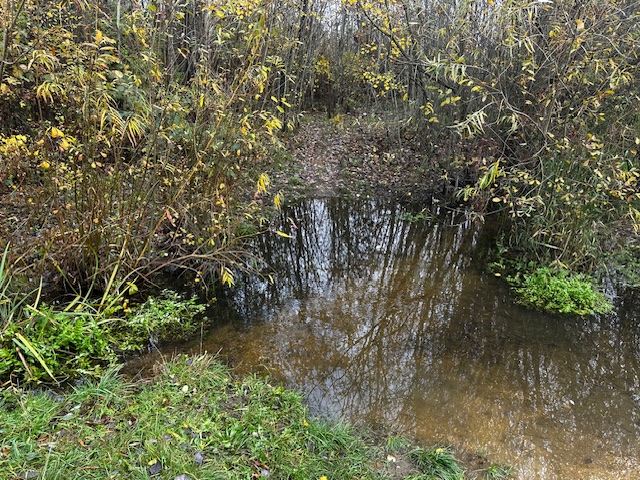
Location: Tice’s Meadow Nature Reserve
Survey team: Paul, Simon and myself
Activity: Riverfly monitoring
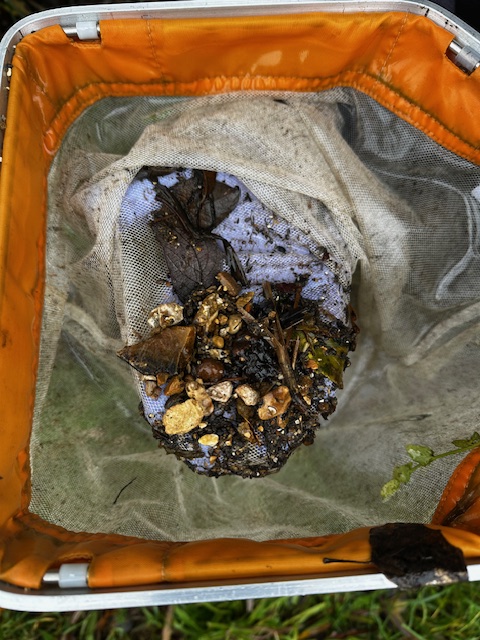
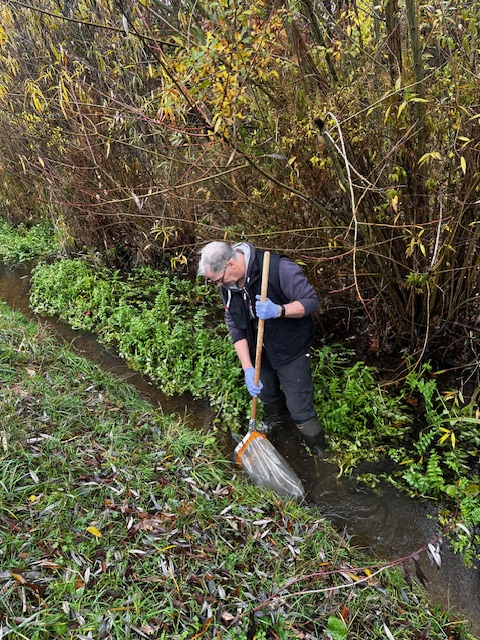
Today we carried out our monthly Riverfly survey at Tice’s Meadow to monitor freshwater invertebrate populations and the ongoing health of the river. With winter approaching, both the water and air temperatures were below 10°C.
| Parameter | Reading |
|---|---|
| Water depth | 29 cm |
| Water temperature | 8.8°C |
| Air temperature | 9.8°C |
| Conductivity | 400 |
| Invertebrate | Count |
|---|---|
| Freshwater shrimp | 100+ |
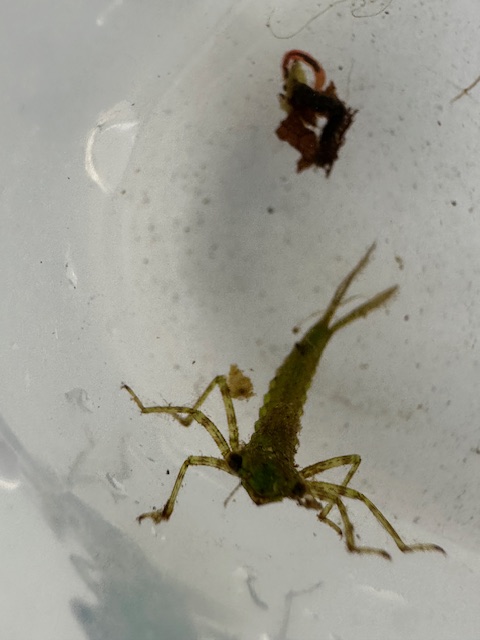
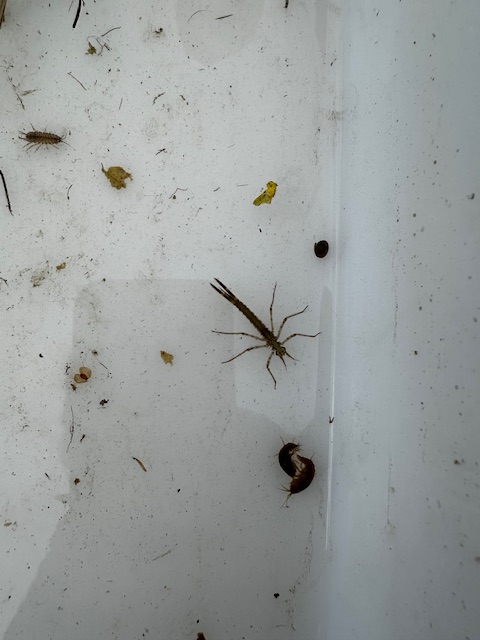
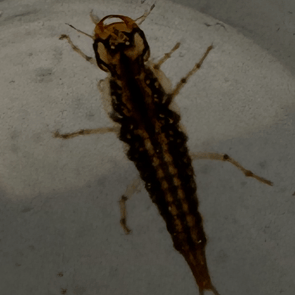
| Damselfly nymphs | 13 |
| Cased caddisfly larvae | 8 |
| Alderfly larva | 1 |
| Pond olive nymph | 1 |
| Water bug | 1 |
| Spider | 1 |
Observations
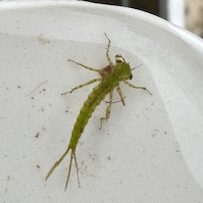
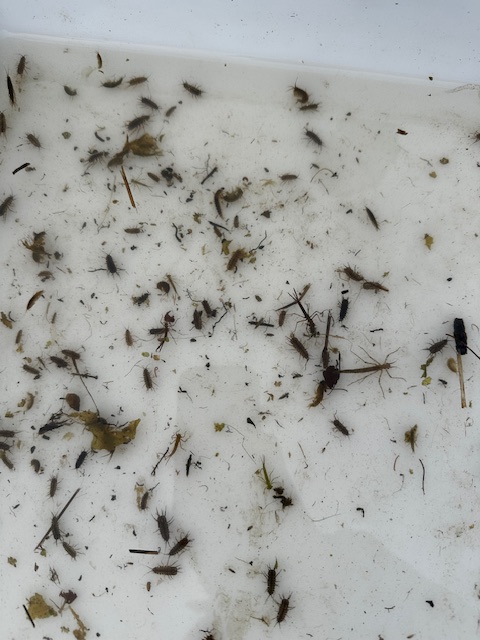
Freshwater shrimp continued to dominate the sample, with over 100 individuals recorded. Both the freshwater shrimp and damselfly nymphs were noticeably large during today’s survey.
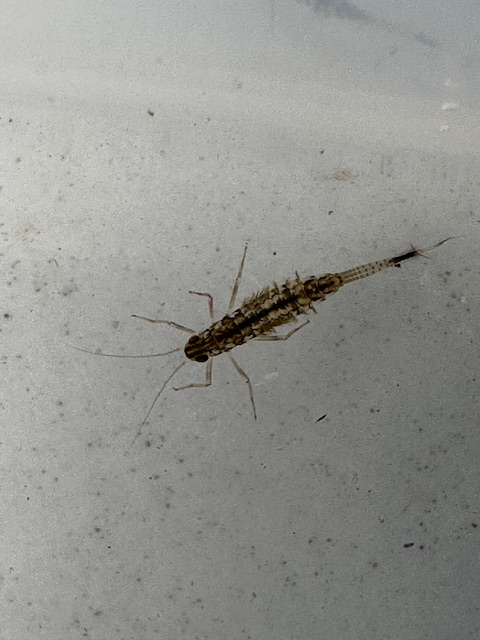
We also recorded eight cased caddisfly larvae, a single alderfly larva and a pond olive nymph, along with a water bug and a spider. Despite the colder water temperatures, there was still a good abundance of freshwater shrimp.
Reflections
One of the most noticeable differences during today’s survey was the size of the damselfly nymphs and freshwater shrimp. The larger damselfly nymphs may reflect their development throughout the year, as many damselfly species spend the winter in their aquatic larval stage before emerging during the warmer months. It was encouraging to see that freshwater shrimp remained abundant despite the drop in water temperature.
Today’s survey also made me consider how seasonal changes influence not only the abundance and diversity of freshwater invertebrates but also their size, development and activity. By continuing to monitor the same location throughout the year, we can build a better understanding of these seasonal patterns and distinguish natural fluctuations from potential changes in water quality.
Over the coming winter months, I would like to pay closer attention to the relationship between water temperature, river depth and the abundance and diversity of the invertebrates we record.

