
Date: 27 October 2026
Location: Tice’s Meadow, Surrey
Activity: Citizen Science – Riverfly Monitoring
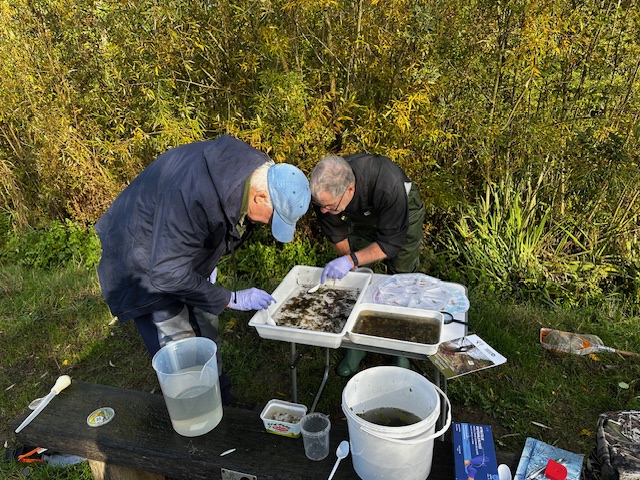
Another morning spent messing about in the river, undertaking our monthly Riverfly survey as part of a citizen science initiative to monitor the health of our freshwater ecosystems.
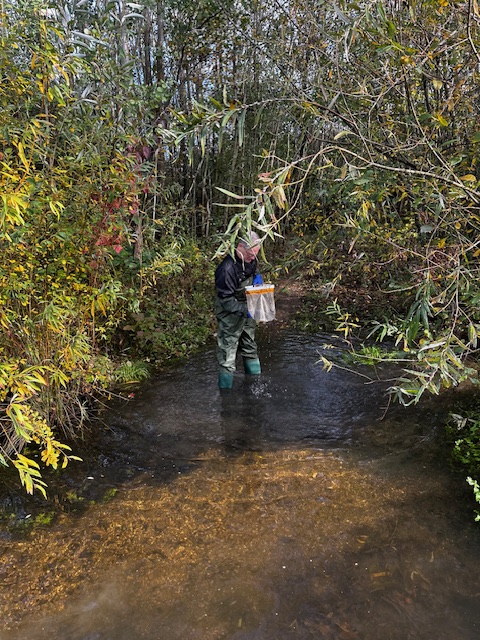
With autumn well underway, this was another opportunity to collect data and observe the freshwater invertebrate community.
Survey Observations
We recorded reasonable results, with plenty of freshwater shrimps (Gammarus spp.) and caddisfly larvae (Trichoptera), both important target groups within our monitoring programme.
Additional observations included:
- Freshwater shrimps (Gammarus spp.): Abundant.
- Caddisfly larvae (Trichoptera): 9
- Damselfly nymphs (Zygoptera): 15 individuals of various types.
- Sticklebacks: 2 individuals.
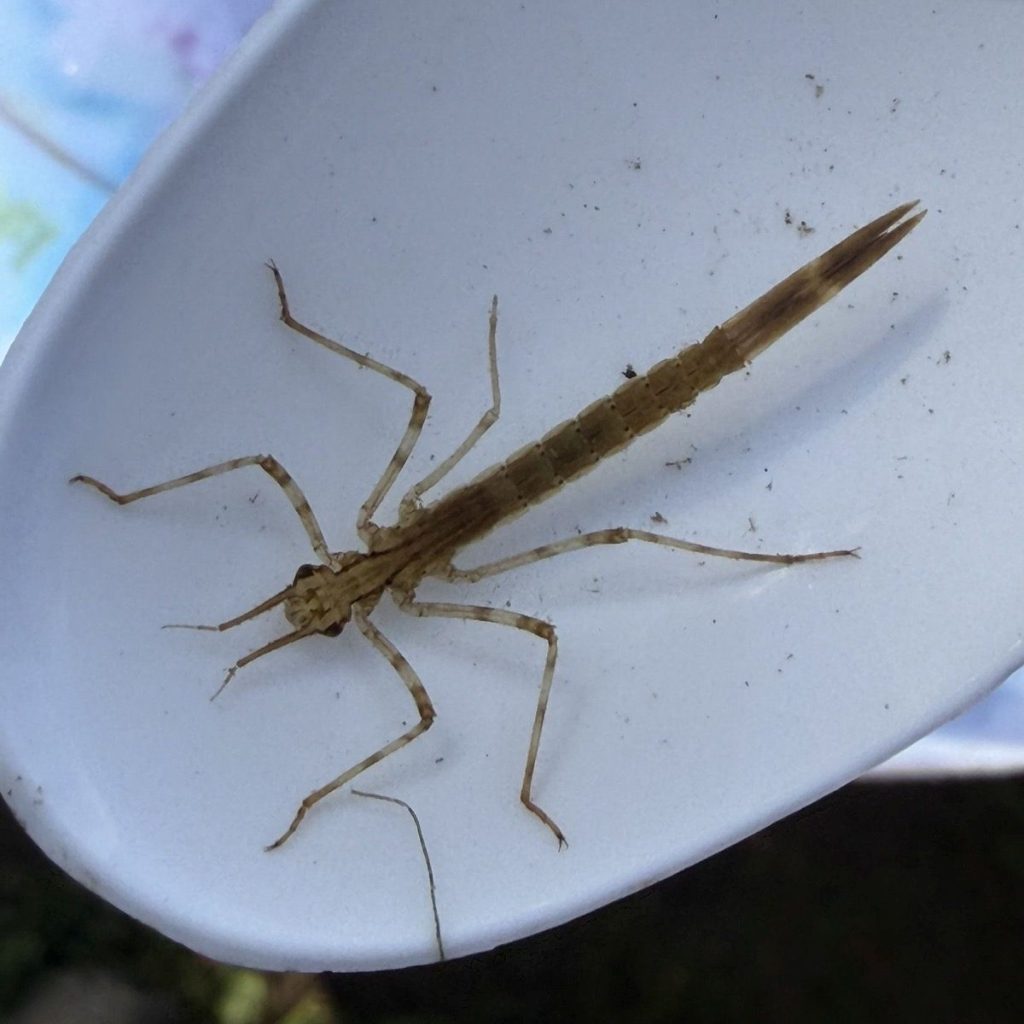
It was encouraging to see good numbers of our target invertebrates, particularly as we move into the colder months. The variety of damselfly nymphs was also interesting, providing further insight into the aquatic life present at the monitoring site.
Its also worth noting that the nitrogen count for October was higher than usual, we are not sure why, but will take another reading next month.
Looking Ahead – Questions for Next Year’s Monitoring
As we approach the end of the year, I have started thinking about how we can build on our monitoring during 2027.
Some questions worth exploring include:
- Seasonal variation: How do invertebrate populations change throughout the year? Are there consistent seasonal patterns in the abundance of our indicator groups?
- Water temperature: Could recording water temperature alongside each survey help us understand seasonal fluctuations in species abundance?
- Water quality: Would collecting additional measurements, such as dissolved oxygen, pH and nutrient concentrations, help explain changes in the invertebrate community?
- Weather and rainfall: How might prolonged dry periods, heavy rainfall or changes in river flow influence our survey results?
- Algal blooms: Following concerns about possible blue-green algal blooms earlier this year, should we monitor visible algal growth and investigate whether it coincides with changes in invertebrate abundance?
- Long-term trends: Can we begin comparing monthly results across different years to identify changes that may not be apparent from individual surveys?
My Reflections
Riverfly monitoring has been a valuable part of my practical field experience this year. Beyond learning to recognise different aquatic invertebrates, I have become increasingly interested in the environmental factors that influence their distribution and abundance.
As I continue studying environmental science, I would like to develop a more detailed understanding of the relationship between freshwater biodiversity, water chemistry, seasonal changes and wider environmental pressures.
Looking ahead to 2027, I think there is an opportunity to build on the data we are already collecting and explore whether additional environmental measurements could help us better interpret the results.
My key takeaway: The next step is not necessarily to collect more data, but to consider which additional measurements would provide meaningful context to our existing monitoring and help us identify longer-term patterns in freshwater ecosystem health.

