10 October 2026 | Near Peaslake, Surrey
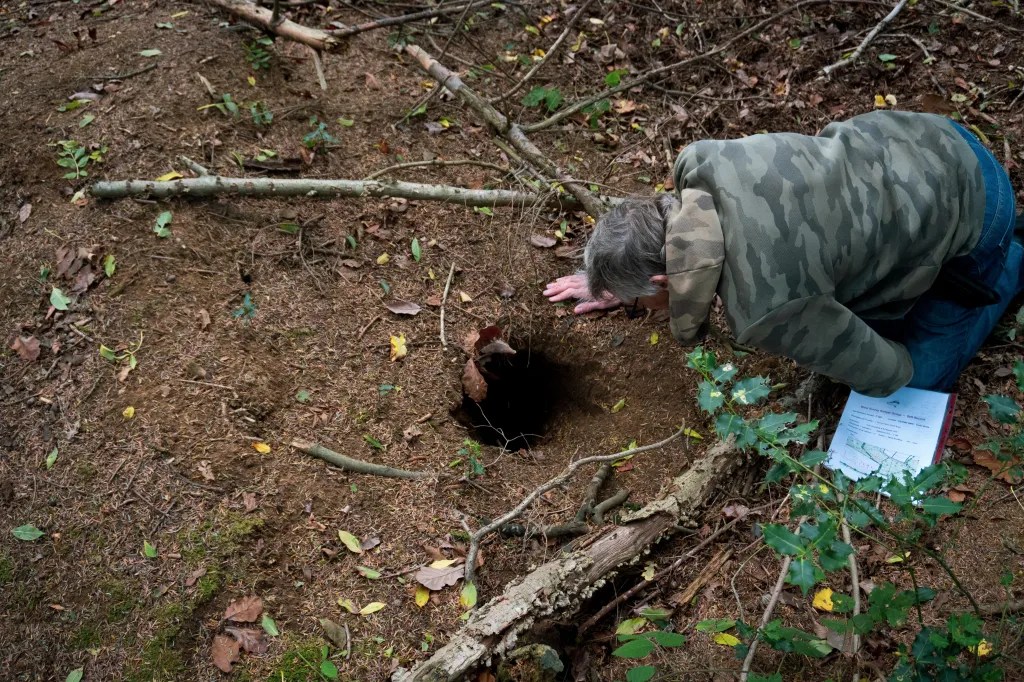
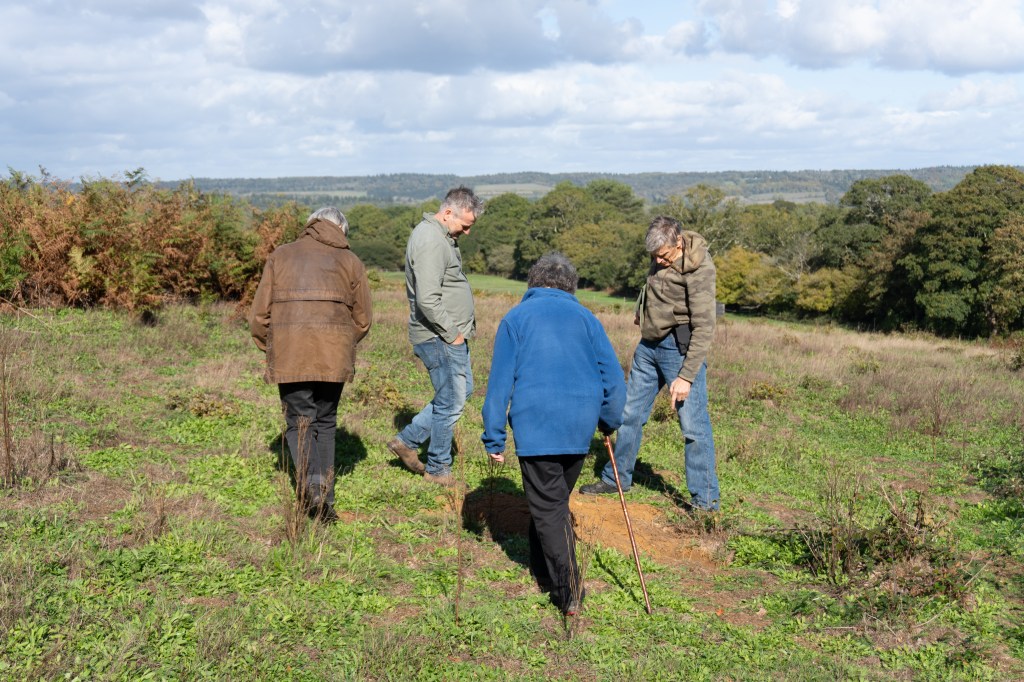
Today I joined the West Surrey Badger Group for a survey led by Pete. Our aim was to revisit four previously recorded badger setts and look for signs of activity.
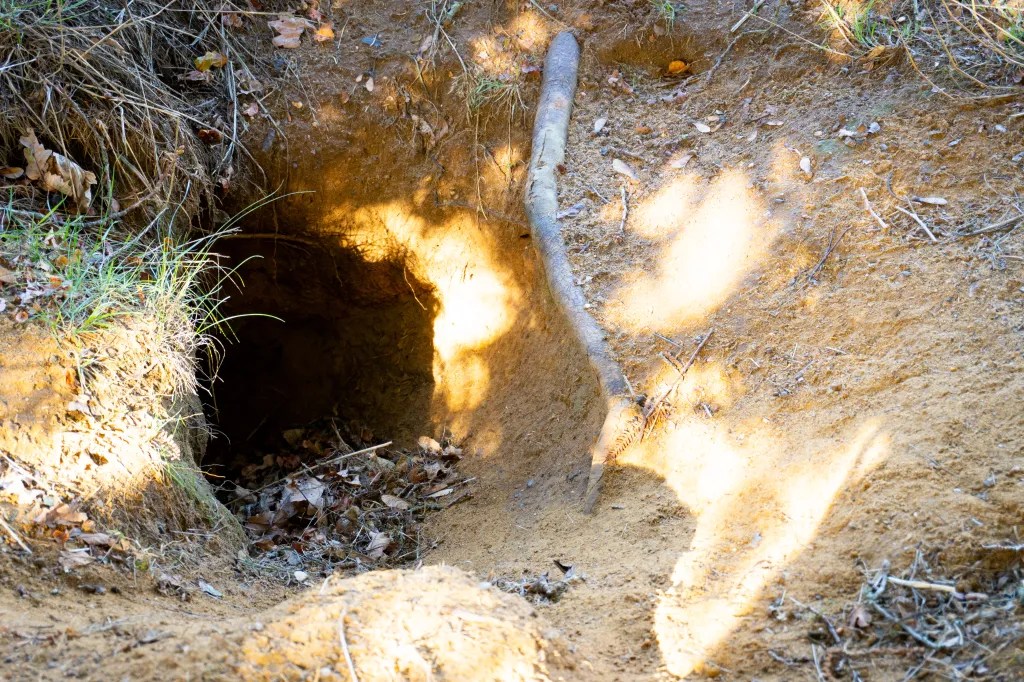
At each sett, we recorded the number of entrance holes on a survey sheet, categorising them as well-used, partially used or disused. This helped us assess how active each sett appeared to be. Alongside the number of entrances, their condition and the sett’s relationship to others nearby helped us consider its classification.
I learnt about the four main types of sett:
- Main sett: usually a larger, well-established sett with several entrances and clear signs of regular use.
- Annexe sett: a smaller sett close to the main sett, often connected by well-used paths.
- Subsidiary sett: farther from the main sett and sometimes used intermittently.
- Outlier sett: generally a small sett with few entrances, used occasionally.
We looked for signs such as badger hairs, paw prints, cleared entrances and freshly excavated soil. We also checked for snuffle holes, where badgers had searched for food, and dung pits, which form latrines.
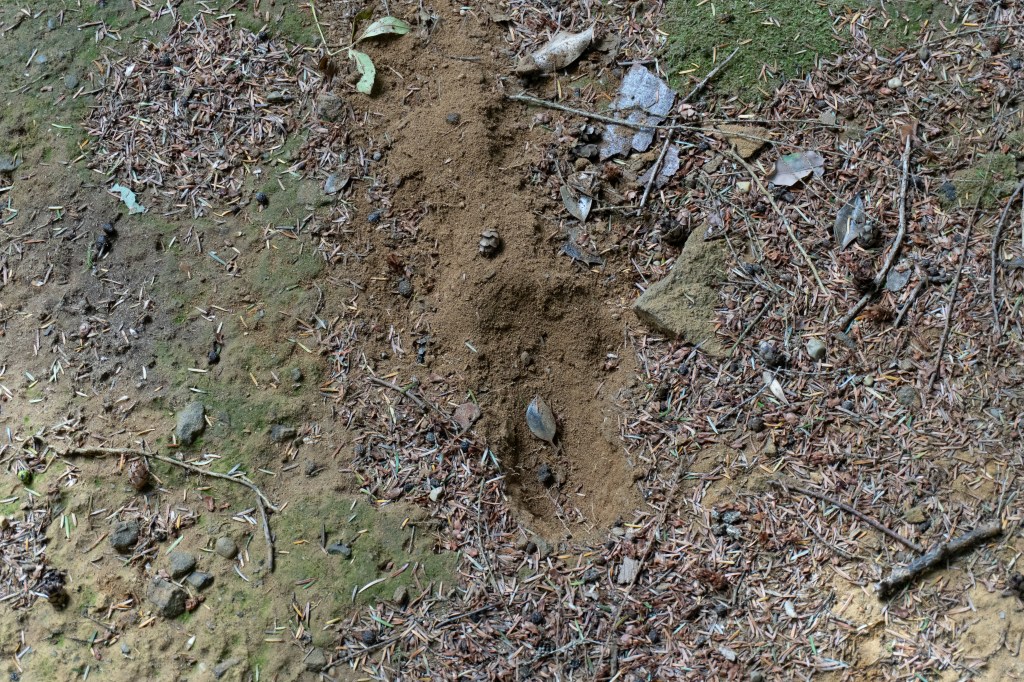
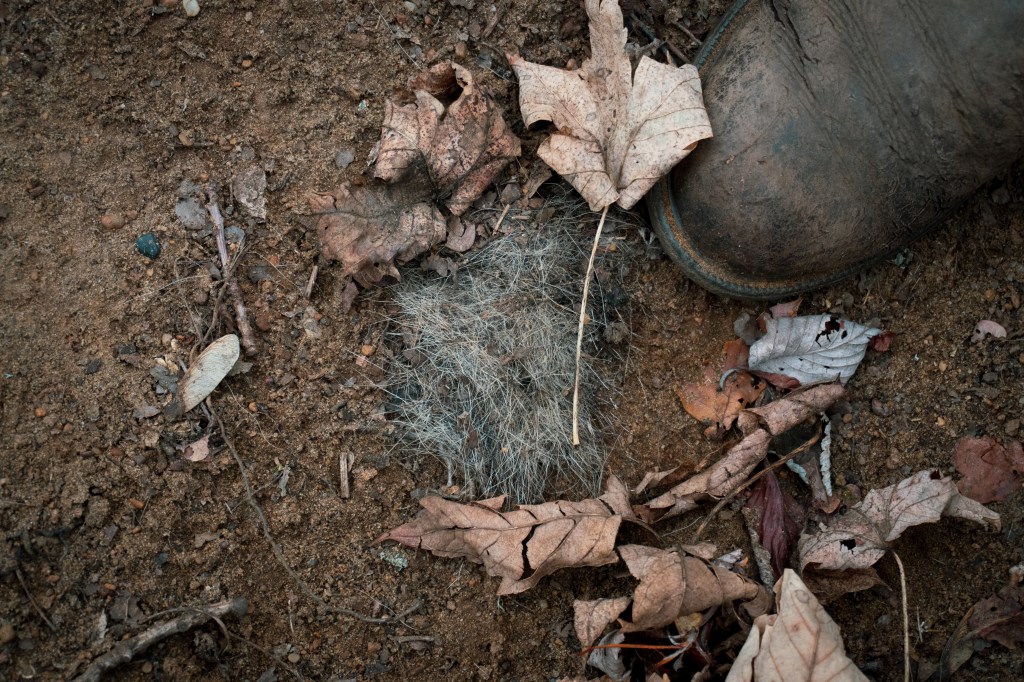
Of the four setts we surveyed, we felt confident that two were currently in use. We found evidence of snuffling and dung pits near most of the setts, although some entrances appeared to be used only periodically. It was useful to see how the different signs built up a picture of activity, rather than relying on the number of holes alone.
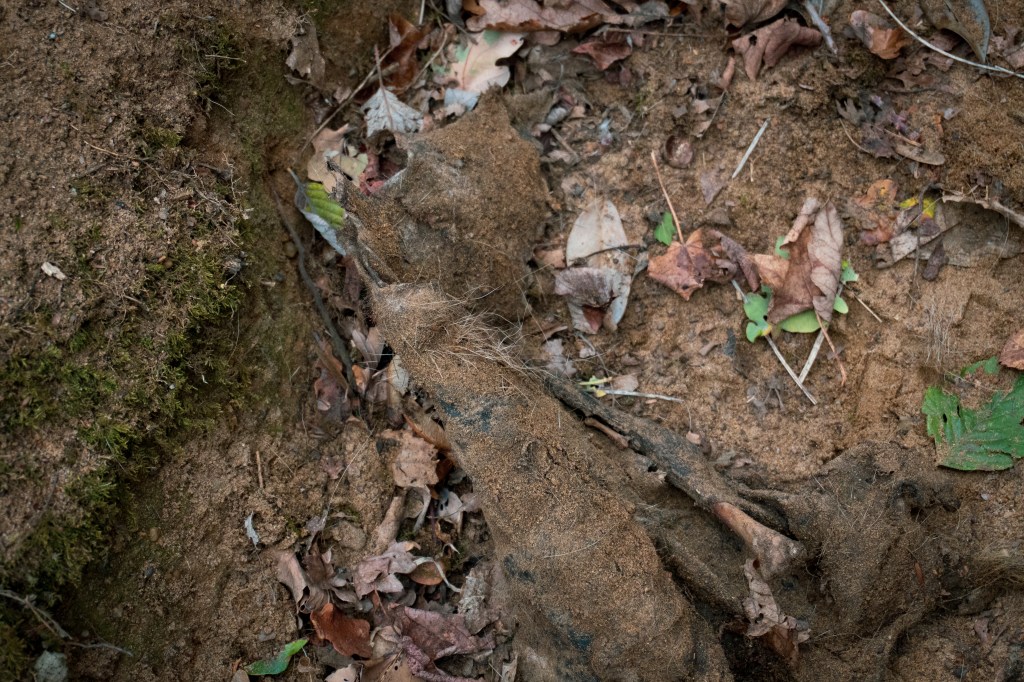
Towards the end of the survey, close to the final sett, we found the remains of a badger, with some hair still attached and a bone visible.
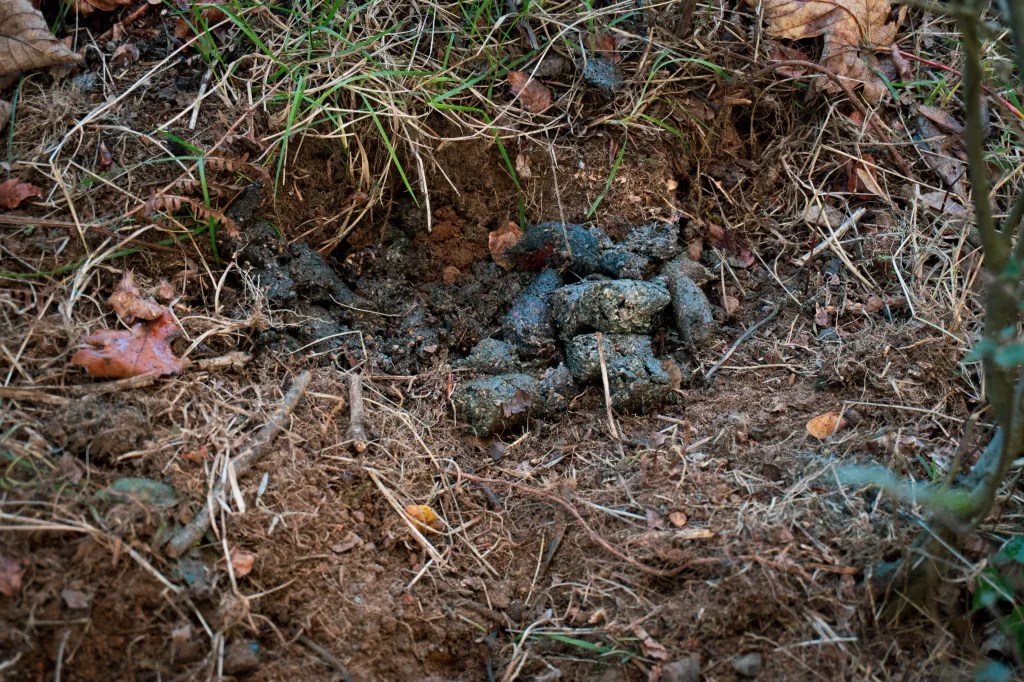
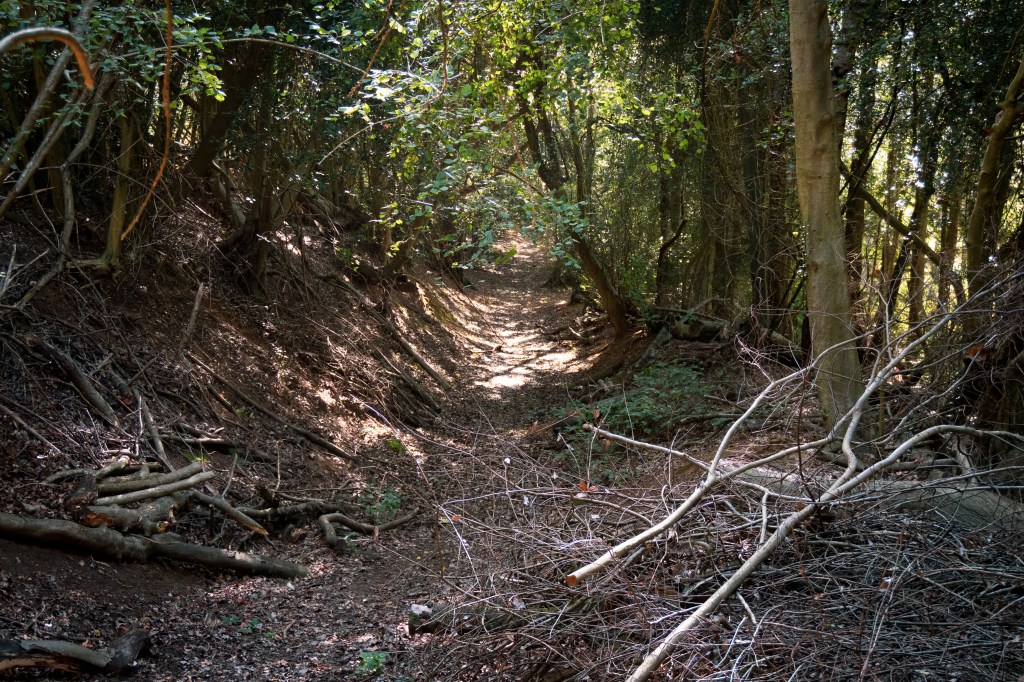
Something that stood out to me was the position of the setts. Almost all were on sloping ground in wooded areas, with access to open grassland nearby. Seeing this pattern across the sites made me think more about how badgers use the surrounding landscape, as well as the setts themselves.
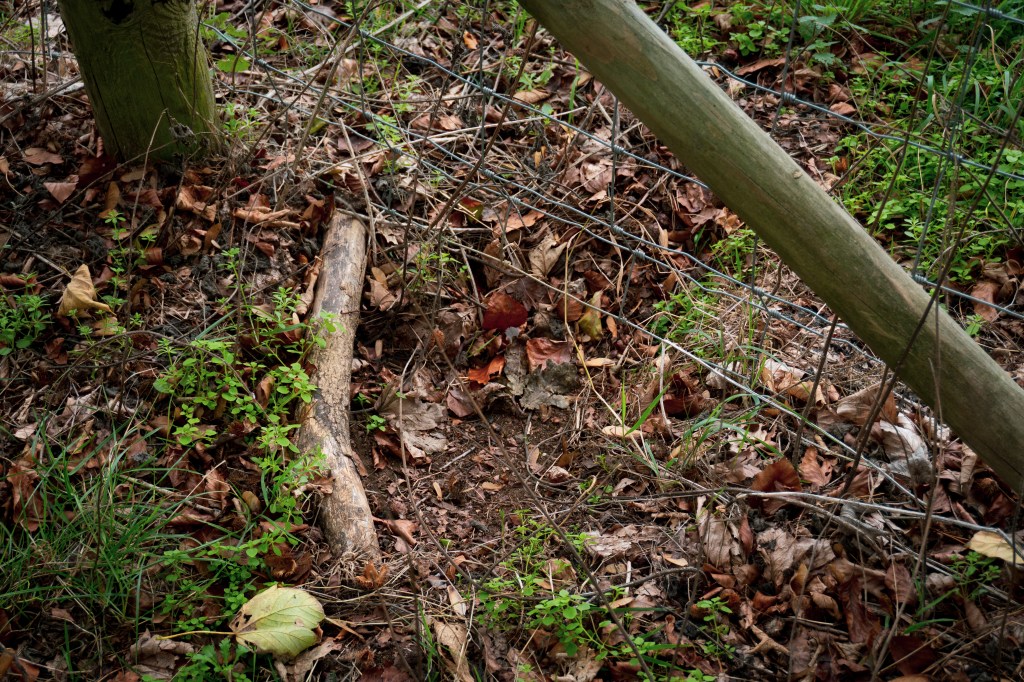
We also looked for well-worn paths leading to and from the setts. At one site, we found a clear route passing underneath a fence and continuing towards the sett. Following these paths helped us see how the badgers were moving through the surrounding area.
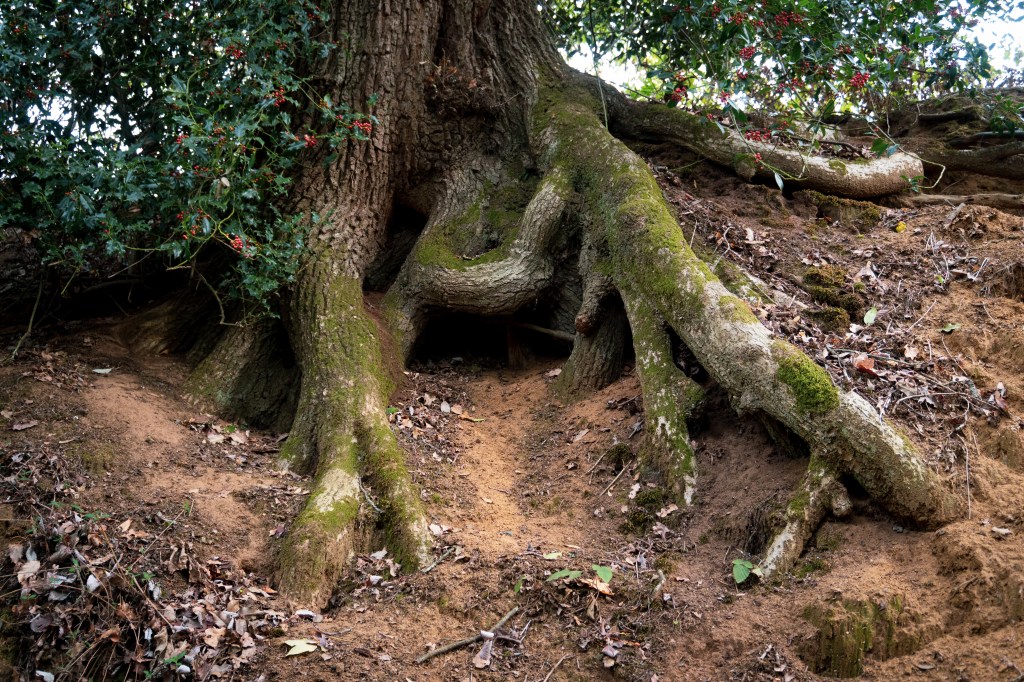
One sett was tucked beneath the exposed roots of a large tree on a wooded slope, as shown in my photograph. The roots spread across the bank, with entrances underneath and clear paths running between them. The worn strips of bare earth stood out against the surrounding leaf litter, showing the routes the badgers had made as they moved to and from the entrances. It was a really useful example of how the paths and the condition of the ground can help us recognise signs of regular use.
The survey gave me practical experience of recording sett activity and a better understanding of what to look for. I’m learning how much you can discover about badgers from the signs they leave behind, even when you don’t see the animals themselves.
Photographs