Introduction to Bat Care
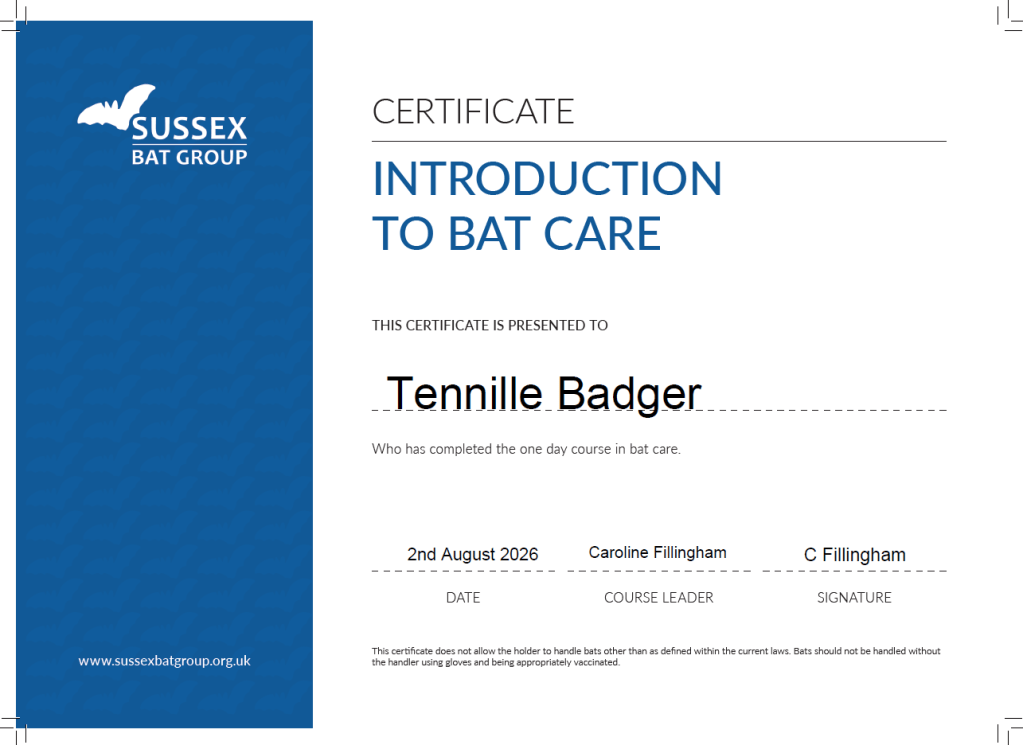
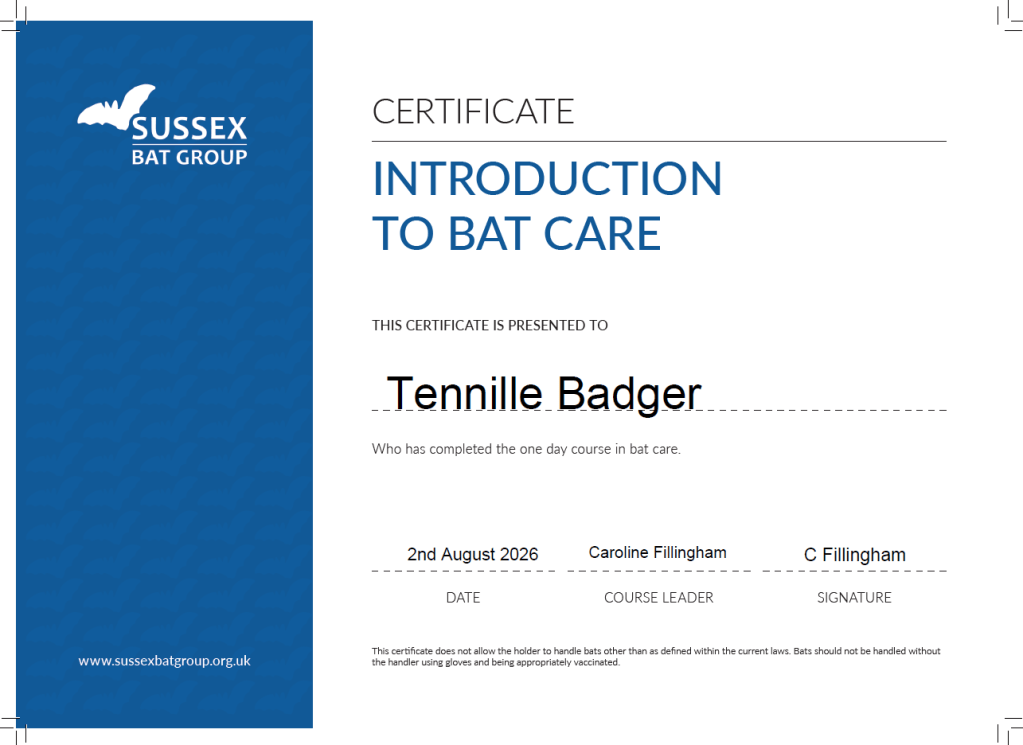
On 2 August, I attended a 5.5-hour introductory Bat First Aid and Care Course at East Horsley Village Hall. The training provided an understanding of the rescue, assessment, rehabilitation and eventual release of injured or displaced bats, highlighting the specialist knowledge required to care for these protected mammals.
The course explored bat biology, common causes of injury and grounding, legal responsibilities, first aid, rehabilitation techniques and the importance of working alongside experienced bat carers and veterinary professionals.
Understanding Bat Biology and Vulnerability
Bats possess several physiological adaptations that must be considered when providing care. Their delicate wing membranes and lightweight bones make them particularly vulnerable to injury, while their ability to enter torpor and hibernation influences their metabolic requirements, temperature regulation and recovery.
We discussed both natural and human-related causes of bat casualties, including:
- Habitat loss and agricultural intensification, reducing suitable roosting and foraging habitats.
- Declining insect populations, affecting food availability.
- Artificial lighting, disrupting commuting routes and foraging behaviour.
- Cat predation, a significant cause of injuries among rescued bats.
- Buildings and infrastructure, including collisions, unsuitable roofing membranes and accidental entrapment.
- Extreme weather and climate change, increasing the risk of exhaustion and starvation.
An important consideration was that a bat found grounded during daylight hours may be injured, dehydrated, exhausted or otherwise compromised, even when no obvious external injuries are visible.
Legal Protection and Animal Welfare
Bats and their roosts are afforded strict legal protection in the UK. The course examined legislation relevant to bat conservation and rehabilitation, including the Wildlife and Countryside Act 1981, the Conservation of Habitats and Species Regulations and the Animal Welfare Act 2006.
Although injured bats may be temporarily rescued and cared for with the intention of release, longer-term possession may require an appropriate licence. Veterinary diagnosis, prescription medication and surgical interventions must also remain within the relevant professional and legal requirements.
The importance of accurate record-keeping was emphasised, including documenting where a bat was found, the circumstances of rescue, potential injuries, treatment history and eventual outcome. Such records can also contribute valuable information to wider conservation monitoring.
Initial Assessment and First Aid
A key part of the course focused on the initial assessment of a rescued bat and recognising when urgent veterinary intervention is required.
Assessment begins with obtaining information about the circumstances in which the bat was found, followed by careful observation of its physical condition and behaviour.
Important indicators include:
- Body condition, weight and potential dehydration.
- Wing symmetry, swelling, fractures or membrane damage.
- Evidence of bleeding, bruising or contamination.
- Signs of exhaustion, abnormal behaviour or neurological impairment.
- Age, sex and reproductive status, particularly dependent pups and lactating females.
The course reinforced the importance of minimising handling and stress, maintaining an appropriate temperature and providing safe, secure containment.
Cat-related injuries require particular urgency, as even small puncture wounds can introduce serious bacterial infections. Veterinary assessment and prompt treatment may therefore be necessary even when a bat appears relatively unharmed.
Health and safety considerations were also discussed, including appropriate protective gloves, rabies vaccination requirements for regular bat handlers and procedures following bites or scratches.
Treatable and Untreatable Injuries
One of the most informative aspects of the training was learning how different injuries affect a bat’s prospects for recovery.
Potentially treatable injuries include holes or tears in the wing membrane, some fractures of finger bones or the radius, superficial wounds, burns, cat bites and certain shoulder injuries. However, recovery depends on injury severity, veterinary assessment and the bat’s ability to regain normal function.
Severe spinal injuries, extensive crushing injuries, exposed organs, broken jaws and significant damage to major wing joints generally have poor prognoses.
The course highlighted the ethical responsibilities involved in bat rehabilitation. While every reasonable opportunity for recovery should be considered, prolonged treatment is not always in an animal’s best interests when pain cannot be adequately managed or meaningful recovery is unlikely.
Recovery and Rehabilitation
I was particularly interested in the recovery times associated with wing injuries, which can be considerably longer than expected.
- Wing membrane holes: approximately 1–3 months, depending on size and severity.
- Wing tears: potentially six months or longer.
- Broken finger bones: approximately six weeks.
Healing may slow considerably during winter, as lower temperatures and reduced metabolic activity influence recovery.
An interesting aspect of rehabilitation is the importance of controlled flight exercise once an injury has sufficiently healed. Wing movement helps maintain flexibility and prevents scar tissue from restricting flight performance.
We also explored the importance of suitable housing, appropriate nutrition, hydration, hygiene and environmental enrichment during recovery. These requirements vary according to species, age, health and the expected duration of care.
Rehabilitation and Release
The ultimate objective of bat rehabilitation is to return a healthy, independently functioning animal to the wild whenever possible. However, the ability to fly alone is not sufficient evidence that a bat is ready for release.
The course identified several important release criteria:
- Strong, sustained flight for a minimum of 15 minutes.
- Ability to take off from the ground.
- Appropriate weight and body condition for the species and season.
- Ability to feed, groom and behave normally.
- Suitable weather conditions and time of year.
- Release near the original rescue location wherever appropriate.
We also considered the additional challenges associated with orphaned pups, overwintering bats and animals requiring extended rehabilitation.
These examples demonstrated how successful bat care requires an understanding of both individual animal welfare and the wider ecological requirements of the species.
Developing Practical Bat Care Experience
The course outlined a structured approach to becoming involved in bat rehabilitation, beginning with support roles before progressing to more specialist responsibilities.
Recommended steps included registering with the Bat Conservation Trust (BCT) and a local bat group, gaining experience alongside an established carer, understanding appropriate handling and health and safety procedures, and developing the ability to recognise normal bat behaviour and physical condition.
Establishing contact with an experienced wildlife veterinarian was also identified as an important component of responsible bat care.
Experience should be developed progressively, particularly before undertaking the demanding responsibilities associated with neonatal pups, severely injured bats or long-term rehabilitation.
Personal Reflection
Having already participated in bat surveys and monitoring activities, I found this course particularly valuable because it introduced a different aspect of bat conservation.
Field surveys have allowed me to observe bats within their natural environment and develop an appreciation of their ecological requirements. Bat care provided an opportunity to consider the challenges faced by individual animals when injury, habitat disturbance or environmental pressures prevent them from surviving independently.
I was particularly struck by the complexity of wing injuries and the lengthy rehabilitation periods sometimes required to restore full flight capability. It reinforced the importance of understanding anatomy, physiology and animal behaviour alongside ecological field skills.
The training also raised an important question for me: how can information collected through bat rescue and rehabilitation contribute to identifying wider conservation pressures, particularly those associated with cat predation, habitat fragmentation and human infrastructure?
This is an area I would like to explore further, particularly through the systematic recording of casualty causes, locations and rehabilitation outcomes.
The course has strengthened my interest in becoming involved in practical bat care alongside my ecological surveying activities. My next step will be to seek supervised experience with a local bat carer or bat group, allowing me to develop the necessary handling, assessment and welfare skills before considering more independent responsibilities.
Ultimately, this experience has broadened my understanding of bat conservation beyond habitat protection and population monitoring, highlighting the important role that rescue, rehabilitation and public education can play in supporting bat welfare.
Reference
Millar, A. (2026) Bat First Aid and Care Course. Course training booklet.
Further information: Bat Conservation Trust