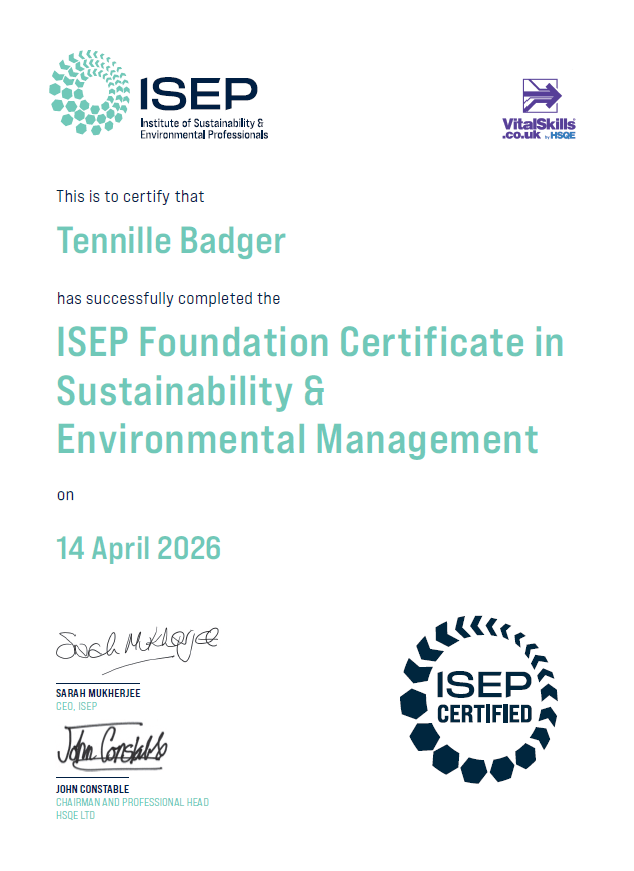
From Feb to April 2026, I undertook the ISEP Foundation Certificate in Sustainability and Environmental Management, a course covering ten modules that explore the scientific, legislative and organisational principles underpinning sustainable development.
As I continue my studies in environmental science and develop my practical experience in ecology and conservation, I wanted to strengthen my understanding of how environmental challenges are addressed beyond individual habitats and species. In particular, I was interested in how organisations identify environmental risks, comply with legislation, measure their impacts and implement meaningful improvements.
The course provided an opportunity to examine sustainability from several perspectives, bringing together natural systems, environmental governance, pollution prevention, legislative requirements and management frameworks.
What became increasingly apparent throughout the course was that environmental sustainability is not simply a matter of reducing pollution or protecting wildlife. It requires a coordinated approach that integrates scientific understanding, economic considerations, social responsibility and effective organisational management.
Module 1 – Fundamentals of Sustainability and Global Trends
The first module introduced the fundamental principles of sustainability and sustainable development.
A central distinction was that sustainability represents the long-term goal, while sustainable development describes the process of achieving it.
Sustainability is commonly understood through three interconnected pillars: environmental protection, social wellbeing and economic viability. Achieving sustainability requires balancing these dimensions without compromising the ability of future generations to meet their own needs.
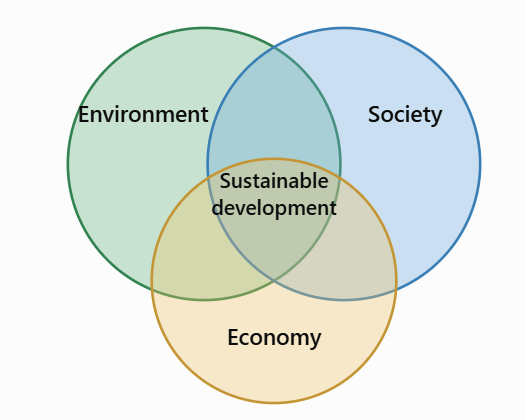
Figure 1. The three interconnected pillars of sustainability. Conceptual illustration based on Module 1.
The module examined the United Nations Sustainable Development Goals (SDGs), global population growth, resource scarcity and climate change. Two particularly important frameworks were introduced:
- Planetary Boundaries: A framework identifying nine Earth-system processes that help define a safe operating space for humanity.
- Doughnut Economics: An approach combining an ecological ceiling with a social foundation, highlighting the importance of meeting human needs without exceeding environmental limits.
Climate change was considered through the greenhouse effect, anthropogenic greenhouse gas emissions and the distinction between mitigation and adaptation.
My key learning: Environmental, social and economic systems cannot be treated independently. Sustainable development requires understanding their interdependencies and the limits imposed by Earth’s natural systems.
Module 2 – Environmental Principles and Natural Systems
This module explored the ecological processes that support life, with particular emphasis on natural cycles, biodiversity and ecosystem services.
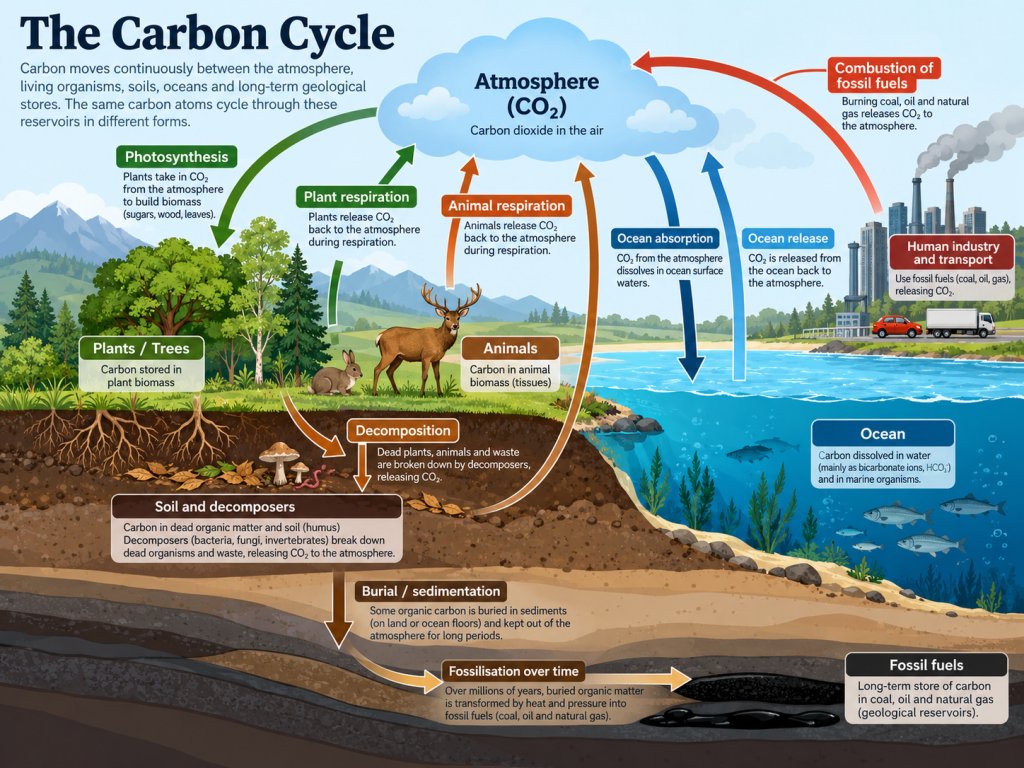
The water, carbon, nitrogen and phosphorus cycles were examined to demonstrate how materials move between the atmosphere, biosphere, hydrosphere and geosphere.
Human activities can disrupt these cycles through fossil fuel combustion, agricultural fertilisation, land-use change and pollution.
For example, excessive nitrogen and phosphorus entering freshwater ecosystems can stimulate algal growth, leading to eutrophication and potentially reducing dissolved oxygen concentrations.

The module also explored biodiversity, including the diversity of species, genetic variation and ecosystems, together with the growing pressures responsible for biodiversity loss.
Another important concept was natural capital, which describes stocks of natural resources such as soils, water, habitats and living organisms.
These stocks generate ecosystem services, including water purification, pollination, carbon storage, food production and recreational opportunities.
Natural capital valuation was introduced as a means of recognising the benefits ecosystems provide to society and economic activity.
My key learning: Healthy ecosystems are fundamental to environmental and economic resilience. Protecting biodiversity is not an isolated conservation objective but an essential component of sustainable development.
This module was particularly relevant to my ecological interests because it demonstrated how habitat protection and restoration contribute to wider ecosystem functioning.
Module 3 – Sustainable Organisations and Governance Principles
The third module examined how sustainability becomes embedded within organisational structures, policies and decision-making.
One framework discussed was the Five Capitals Model, which recognises five types of capital upon which organisations and societies depend:
- Natural capital – environmental resources and ecosystems.
- Human capital – people’s knowledge, skills and wellbeing.
- Social capital – relationships, institutions and trust.
- Manufactured capital – infrastructure, machinery and physical assets.
- Financial capital – financial resources supporting economic activity.
The module also examined ethical governance, equality and diversity, corporate sustainability and the role of the UN Sustainable Development Goals in guiding organisational objectives.
A significant area of learning concerned climate commitments, including science-based targets, net-zero emissions, carbon neutrality and carbon offsets.
The ISEP greenhouse gas management hierarchy emphasised the importance of addressing emissions systematically rather than relying primarily on offsetting.
Finally, the concept of a circular economy challenged the conventional linear economic model of extracting resources, manufacturing products and disposing of waste.
Linear economy
Take → Make → Dispose
Circular economy
Reduce → Reuse → Repair → Recover
My key learning: Sustainability must be incorporated into organisational governance and long-term strategy. Environmental commitments become more meaningful when supported by ethical leadership, measurable objectives and responsible resource management.
Module 4 – Pollution and Pollution Control
Pollution prevention formed the basis of Module 4, introducing the different types of pollutants and the methods used to assess environmental contamination.
One of the most useful concepts was the Source–Pathway–Receptor model.

Figure 2. The three elements used to investigate pollution risks.
Pollution risk depends upon the presence of a source, a pathway through which contamination can travel and a receptor that may be adversely affected.
For example, fertiliser runoff from agricultural land may enter a watercourse and affect freshwater organisms.
The module considered air pollution, ozone depletion, water contamination, heavy metals, persistent organic pollutants and eutrophication.
Pollution control was examined through a hierarchy that prioritises preventing pollution at source before relying on measures to contain, treat or remediate contamination. Emergency response planning and Integrated Pollution Prevention and Control (IPPC) were also introduced.
My key learning: Effective pollution control depends on understanding how contaminants move through the environment. Preventing contamination is generally preferable to managing its consequences after environmental damage has occurred.
Module 5 – Introduction to Environmental Policy and Legislation
This module introduced the principles supporting environmental policy and the legal mechanisms used to protect the environment.
The key environmental policy principles included:
- Polluter Pays Principle: Those responsible for pollution should bear the associated costs of preventing or addressing environmental damage.
- Precautionary Principle: Where potentially serious environmental harm is identified, scientific uncertainty should not automatically justify delaying preventive measures.
- Producer Responsibility: Manufacturers and producers can be assigned responsibility for environmental impacts associated with their products.
- Best Available Techniques (BAT): Techniques used to achieve a high level of environmental protection, taking account of technical and economic considerations.
- Best Practicable Environmental Option (BPEO): An approach considering environmental consequences when identifying suitable management options.
The module also examined legislative, fiscal, market-based and voluntary policy instruments.
Another important area was the distinction between civil and criminal environmental law.
Civil law may address environmental harm through actions involving nuisance, negligence or trespass, while criminal law concerns offences established by legislation and enforced through regulatory authorities.
My key learning: Environmental legislation establishes enforceable responsibilities, while environmental policy provides direction for achieving broader sustainability objectives. Effective environmental management requires understanding both.
Module 6 – Key UK Environmental Legislation
Building on Module 5, this module examined legislation governing wildlife conservation, pollution, waste management and climate change in the UK.
Conservation legislation included the Wildlife and Countryside Act 1981, which provides protection for wild birds and certain other species and habitats.
The module also examined the roles of regulatory authorities and the legal controls surrounding statutory nuisance, air emissions, water abstraction and discharges.
Waste management was another major focus, particularly the waste hierarchy.
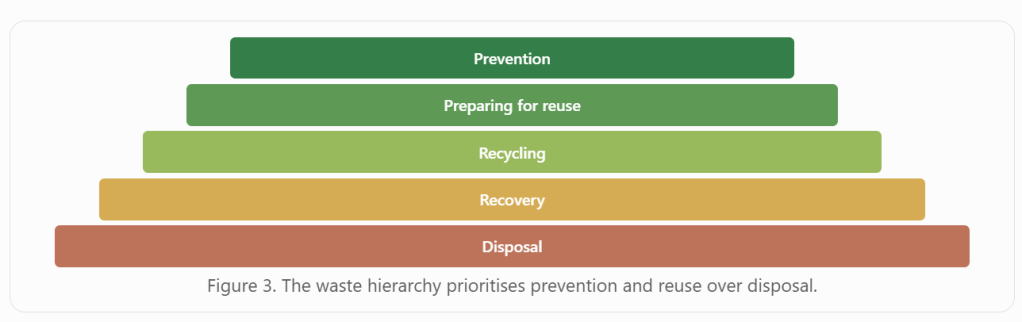
Figure 3. The waste hierarchy prioritises prevention and reuse over disposal.
The module covered waste classification, hazardous waste, the duty of care and producer responsibility.
Climate-related legislation and policy mechanisms included the Climate Change Act 2008, energy performance requirements, the Climate Change Levy and the Energy Savings Opportunities Scheme (ESOS).
My key learning: Legal compliance is a fundamental responsibility of organisations and individuals working in environmental management. For ecological fieldwork, understanding species protection and regulatory obligations is especially important when assessing habitats, planning surveys or recommending management activities.
Module 7 – Environmental Tools and Assessment
Module 7 moved from environmental principles into the practical tools used to identify, evaluate and manage environmental impacts.
An Initial Environmental Review was introduced as a systematic assessment of an organisation’s existing environmental performance.
The module also examined environmental compliance registers, which help organisations identify and monitor applicable legal obligations.
An important distinction was made between environmental aspects and environmental impacts.
An environmental aspect is an element of an organisation’s activities, products or services that interacts with the environment. An environmental impact is the resulting environmental change.
For example, fuel consumption is an environmental aspect, while the resulting greenhouse gas emissions contribute to an environmental impact.
The module introduced life-cycle thinking and Life Cycle Assessment (LCA), considering environmental impacts associated with products and services across different stages of their existence.
Raw materials -> Production ->Transport ->Use -> End of life
Other topics included sustainable procurement, Environmental Impact Assessment (EIA) and environmental auditing.
Audits were examined as structured processes for assessing compliance, management systems and environmental performance, with emphasis on evidence, independence and systematic reporting.
My key learning: Environmental assessment provides the evidence required to identify significant impacts and make informed decisions. This principle is particularly relevant to ecological assessment, where reliable baseline information and structured evaluation are essential.
Module 8 – Data and Reporting
The eighth module focused on environmental monitoring, performance indicators and transparent reporting.
A central principle was that environmental improvements must be supported by reliable and measurable data.
The module distinguished between absolute and normalised environmental indicators.
For example, an organisation might measure its total annual electricity consumption as an absolute indicator, while electricity consumed per unit of production could provide a normalised measure of performance.
Carbon footprinting was introduced as a means of quantifying greenhouse gas emissions associated with an organisation, activity or product.
The module also examined sustainability reporting frameworks, including the Global Reporting Initiative (GRI) and the UK’s Streamlined Energy and Carbon Reporting (SECR).
The concept of materiality was explored to help determine which sustainability issues are sufficiently important to include in organisational decision-making and reporting.
Verification and assurance were introduced as mechanisms to increase confidence in the accuracy and credibility of sustainability information.
My key learning: Monitoring and reporting are essential for demonstrating environmental performance, identifying trends and assessing progress against objectives.
This reinforced the value of consistent data collection in ecological monitoring, where observations become more meaningful when collected systematically over time.
Module 9 – Environmental Management Systems
Module 9 introduced Environmental Management Systems (EMS), focusing principally on ISO 14001:2015.
An EMS provides an organisational framework for managing environmental responsibilities, meeting compliance obligations and improving environmental performance.
The key framework discussed was the Plan–Do–Check–Act (PDCA) cycle.
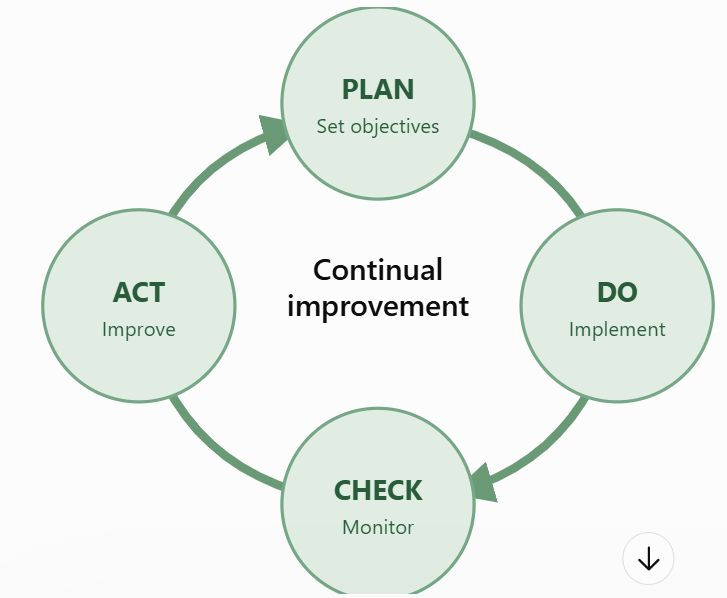
Figure 4. The Plan–Do–Check–Act cycle underlying environmental management systems.
The PDCA cycle provides a structured process for continual improvement:
- Plan: Identify environmental aspects, risks and compliance obligations, and establish objectives.
- Do: Implement management processes, operational controls and training.
- Check: Monitor environmental performance, conduct audits and evaluate compliance.
- Act: Address nonconformities, review performance and implement improvements.
The module also explored leadership responsibilities, organisational context, documented information, operational planning and management review.
My key learning: Environmental sustainability is an ongoing management process rather than a single initiative. A successful EMS requires leadership commitment, measurable objectives, effective monitoring and continual improvement.
Module 10 – Managing Change and Internal Communication to Improve Sustainability Performance
The final module brought together environmental management, organisational change and communication.
One of its central themes was the importance of creating a convincing business case for sustainability.
Environmental improvements can provide economic benefits through resource efficiency, reduced operating costs and lower regulatory risks. However, the business case also includes less easily quantified benefits, such as reputation, employee engagement and stakeholder confidence.
The module introduced organisational change as a transition between three states: the current state, a period of transition and the desired future state.
It examined barriers to change, employee responses and the importance of creating an organisational culture that supports sustainability.
Project management tools were also considered, including the use of a RAID log to record risks, assumptions, issues and dependencies.
Internal communication was identified as an essential component of successful environmental change. Sustainability initiatives require clear messages, stakeholder involvement and an understanding of how different audiences respond to information.
My key learning: Scientific evidence and environmental objectives alone are insufficient to achieve sustainability. Successful implementation also depends on leadership, stakeholder engagement, effective communication and structured change management.
This module connected particularly well with my existing project and programme management experience, demonstrating how established delivery and governance methods can support environmental improvements.
Reflections on My Learning
Completing the ISEP Foundation Certificate helped me bring together several subjects that I had previously considered independently.
The scientific modules strengthened my understanding of how natural systems operate and why protecting biodiversity and ecosystem functioning is essential. The legislation modules demonstrated how environmental responsibilities are translated into regulatory requirements, while the management modules introduced the frameworks organisations can use to reduce their environmental impacts.
Three themes stood out.
First, sustainability must be considered at a systems level. Environmental problems rarely occur in isolation. Climate change, biodiversity decline, pollution and resource depletion are interconnected, and addressing one issue without considering others can result in unintended consequences.
Second, evidence is fundamental to environmental decision-making. Whether monitoring water quality, measuring carbon emissions or assessing the significance of environmental impacts, reliable data provides the basis for evaluating change and demonstrating improvement.
Third, environmental improvements depend on people and organisations. Policies, legislation and scientific knowledge provide important foundations, but their effectiveness ultimately depends on implementation, governance and the willingness to adopt different practices.
For me, the course also reinforced the relationship between ecology and wider environmental management. Ecological surveys and biodiversity assessments provide important information about habitats and species, but their value increases when that evidence informs planning, organisational decisions and long-term environmental strategies.
As I continue developing my knowledge through my Open University studies and practical conservation experience, I intend to build on these foundations, particularly in environmental assessment, biodiversity management and the application of sustainability principles to real-world projects.
Questions for Further Exploration
The course also raised questions that I would like to examine as my studies progress:
- How can organisations accurately measure biodiversity impacts alongside more established environmental indicators such as carbon emissions and energy consumption?
- Can natural capital valuation adequately capture the ecological and intrinsic value of biodiversity?
- How effective are environmental management systems in delivering measurable environmental improvements rather than simply demonstrating procedural compliance?
- How can ecological evidence be better integrated into organisational sustainability strategies and decision-making?
These questions highlight an important challenge in environmental management: translating scientific understanding and environmental commitments into meaningful, measurable improvements for the natural world.