Date: 23–24 April 2026
Location: Testwood Education Centre, Hampshire
Duration: 14 hours (2 days)
Organisation: Hampshire & Isle of Wight Wildlife Trust (HIWWT)
Introduction
As I continue developing my ecological field skills, I am becoming increasingly aware that working safely outdoors requires more than knowledge of species and habitats. Ecological surveys frequently take place in woodland, wetlands, remote countryside and areas where access to emergency services may be limited.
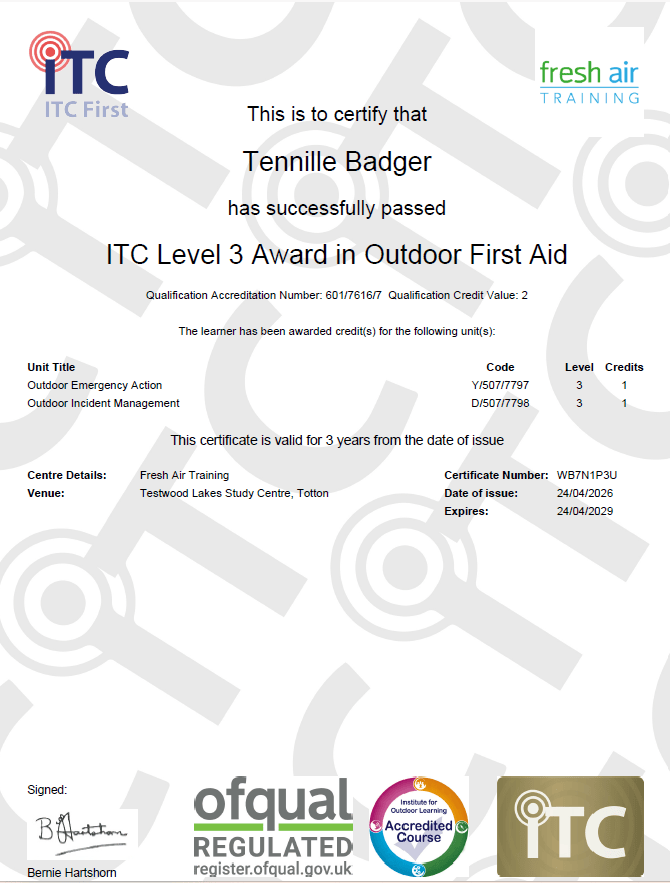
To improve my preparedness, I completed a two-day Outdoor First Aid course at Testwood Education Centre, organised by the Hampshire & Isle of Wight Wildlife Trust.
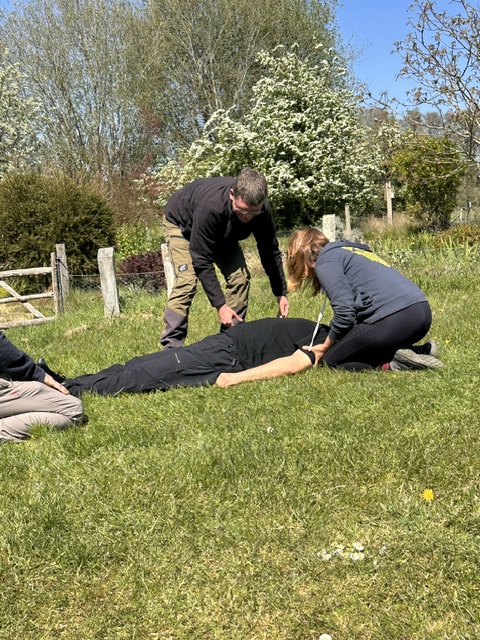
The training combined theoretical instruction with practical exercises and realistic outdoor emergency scenarios, helping me develop the confidence and skills needed to respond appropriately when accidents or medical emergencies occur in the field.
Assessing an Emergency
One of the most important aspects of the course was learning how to approach an emergency systematically, beginning with an assessment of the surrounding environment.
Before assisting a casualty, it is essential to identify potential hazards and ensure that the situation is safe for the casualty, rescuer and other members of the group.
We practised carrying out primary and secondary casualty assessments, identifying immediate threats to life and gathering further information about injuries or medical conditions.
The training emphasised the importance of prioritising treatment, remaining calm and continually reassessing a casualty’s condition while awaiting professional assistance.
This is particularly relevant to ecological fieldwork, where difficult terrain, watercourses, adverse weather and limited communication networks may complicate an emergency response.
First Aid Skills and Practical Training
Throughout the two days, we covered a range of injuries and medical emergencies that may be encountered during outdoor activities.
Life-threatening emergencies
We practised cardiopulmonary resuscitation (CPR), the use of an automated external defibrillator (AED), casualty positioning and managing incidents involving an unresponsive person.
Bleeding and physical injuries
Training included recognising and managing severe bleeding, fractures, sprains, burns, head injuries and suspected spinal injuries. Particular attention was given to preventing further harm while awaiting emergency medical assistance.
Environmental emergencies
We examined the risks associated with hypothermia and heat-related illness, including the importance of recognising symptoms early and protecting casualties from further exposure.
Allergic reactions and anaphylaxis
The course also covered recognising serious allergic reactions and understanding the importance of rapid action when anaphylaxis is suspected.
Responding to Emergencies in Remote Locations
One of the most valuable elements of the training was working through realistic outdoor scenarios.
Unlike emergencies in urban environments, incidents in remote locations may involve delayed access to medical assistance, challenging terrain and exposure to changing weather conditions.
The exercises reinforced the importance of assessing the wider situation rather than focusing solely on the casualty’s immediate injuries.
Effective emergency management may also require coordinating other members of a group, establishing the casualty’s location, communicating with emergency services and preventing further exposure or injury.
How might an emergency response change when professional medical assistance is 30 minutes away rather than five minutes?
This was an important consideration because ecological fieldwork can involve working in relatively isolated locations, sometimes with limited mobile phone reception or difficult access for emergency vehicles.
Risk Assessment and Fieldwork Safety
The course reinforced the importance of preparation before undertaking field activities.
In ecological surveying, this may include reviewing weather conditions, identifying access routes, assessing hazards associated with terrain or water, carrying appropriate safety equipment and ensuring that suitable communication arrangements are in place.
Risk assessments are particularly important when working alone or participating in activities involving remote habitats, night surveys or challenging environmental conditions.
The training also highlighted how effective teamwork and clear communication can significantly influence the outcome of an emergency.
Personal Reflection
I found the practical scenarios particularly valuable because they provided an opportunity to apply what I had learnt rather than simply memorising first aid procedures.
Responding to a simulated emergency requires calm decision-making, clear communication and the ability to prioritise actions when several factors must be considered simultaneously.
These are skills that I recognise from my professional background in project and programme management, where risk assessment, problem-solving and decision-making under pressure are often essential.
However, applying these principles to an outdoor medical emergency introduces a very different set of responsibilities.
As I continue gaining experience through habitat surveys, protected species monitoring and conservation fieldwork, I recognise that the safety and wellbeing of everyone involved must remain a priority.
Completing this course has strengthened my understanding of how to prepare for emergencies, assess situations systematically and respond appropriately while professional assistance is arranged.
It has also reinforced the importance of maintaining and regularly refreshing first aid knowledge, particularly as my ecological fieldwork becomes more varied.
For me, Outdoor First Aid is an important part of developing as a responsible field ecologist. Understanding the natural environment is essential, but so is being prepared for the unexpected when working within it.
Photographs