Field Notes
Date: 15 March 2026
Location: Tice’s Meadow, Farnham, Surrey
Activity: Reptile Survey and Habitat Assessment
Duration: 2 hours
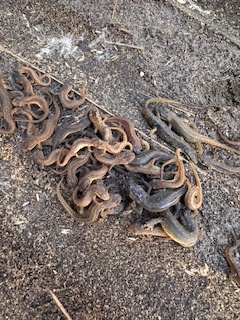
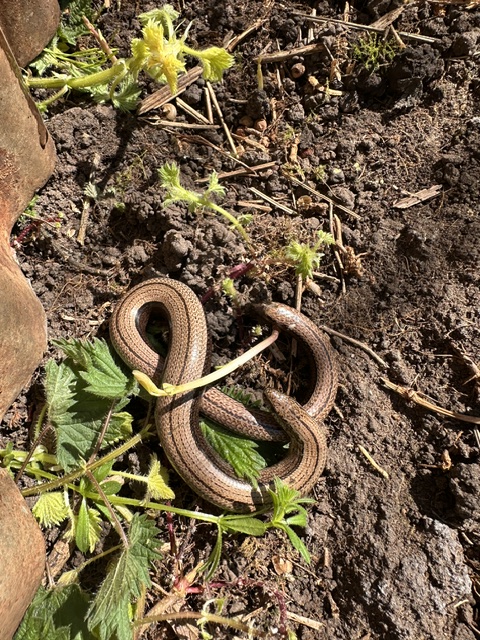
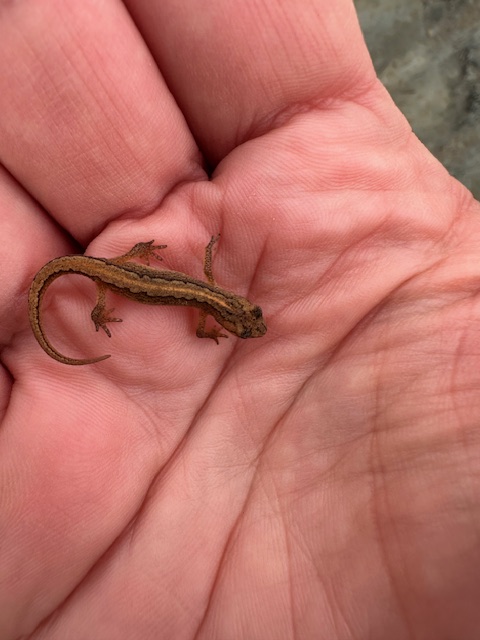
Species Recorded: 3 slow worms (Anguis fragilis) and smooth newts (Lissotriton vulgaris)
Activity Overview
I participated in a two-hour reptile survey at Tice’s Meadow, continuing to develop my practical experience in species identification, ecological surveying and habitat assessment.
During the survey, we recorded three slow worms (Anguis fragilis) and observed smooth newts (Lissotriton vulgaris). Although the primary focus was reptile surveying, the presence of smooth newts provided an opportunity to consider how the same terrestrial habitats can support both reptiles and amphibians.
The session was particularly useful for developing my understanding of the importance of suitable shelter, vegetation structure and microhabitats in supporting these species.
It also reinforced the value of repeated ecological surveys in building a more complete picture of species presence and habitat use over time.
Species Observations
Slow Worm (Anguis fragilis)
Number recorded: 3
Despite their snake-like appearance, slow worms are legless lizards belonging to the family Anguidae.
They are widely distributed in Britain and frequently occur in grassland, woodland edges, scrub and gardens, particularly where suitable ground cover and invertebrate prey are available.
Slow worms are largely secretive, spending considerable time beneath vegetation, within loose soil or under suitable shelter.
Their ecological characteristics include:
- Diet: Predominantly soft-bodied invertebrates, including slugs and earthworms.
- Reproduction: Ovoviviparous, giving birth to live young, usually during late summer.
- Thermoregulation: Depend on external environmental temperatures, frequently using sheltered areas to regulate body temperature.
- Habitat preferences: Areas with varied vegetation structure, suitable shelter and relatively undisturbed ground conditions.
Recording three individuals during the survey confirmed their presence within the area surveyed.
However, the number observed should not be interpreted as a population estimate. Reptile detectability varies with weather conditions, survey methods, seasonal activity and the availability of suitable refuges.
Smooth Newt (Lissotriton vulgaris)
Species recorded; number not documented
The smooth newt is one of Britain’s most widespread amphibians and occupies both aquatic and terrestrial habitats throughout its life cycle.
During spring, adult smooth newts typically return to ponds and other suitable waterbodies to breed. Outside the breeding season, they spend much of their time on land, sheltering beneath logs, stones, vegetation and other suitable cover.
Important ecological characteristics include:
- Breeding: Adults generally return to freshwater habitats during spring.
- Egg-laying: Females lay individual eggs, often folding them within the leaves of aquatic plants.
- Diet: Includes small aquatic and terrestrial invertebrates.
- Terrestrial habitat: Uses damp, sheltered locations, including grassland, woodland and scrub.
- Seasonal behaviour: Movement between aquatic breeding sites and terrestrial feeding or overwintering habitats.
The presence of smooth newts was particularly interesting because it highlighted the ecological relationship between different habitat types.
Although amphibians depend on aquatic environments for reproduction, their terrestrial habitat requirements mean they can be encountered during surveys primarily targeting reptiles.
Survey Techniques and Habitat Assessment
Reptile surveys aim to establish species presence and, where sufficient survey effort is undertaken, may also contribute to assessments of relative abundance or population size class.
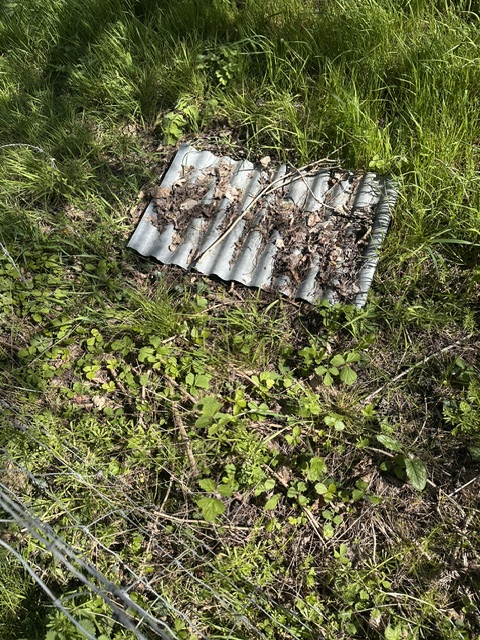
Surveys frequently combine visual observation with artificial cover objects (ACOs), such as roofing felt or metal sheets, which may provide suitable sheltered microhabitats.
Effective reptile surveying requires consideration of several factors:
Weather and temperature
Reptiles are ectothermic, meaning their activity and detectability are influenced by environmental temperature. Survey conditions can therefore affect the likelihood of encountering animals.
Vegetation structure
Habitats containing a mixture of short and tall vegetation, tussocky grassland and scattered scrub can offer suitable basking areas alongside protective cover.
Shelter and refuges
Ground-level shelter can provide protection from predators and unfavourable environmental conditions.
Habitat connectivity
Connected areas of suitable habitat are important for allowing animals to move between feeding, breeding and overwintering locations.
Survey effort
A single survey provides only a snapshot of the species detected on a particular day. Repeated visits under suitable conditions are generally required to develop a more reliable understanding of reptile presence and distribution.
The Tice’s Meadow survey provided an opportunity to consider these factors while continuing to develop my practical ecological observation skills.
Ecological Significance of the Findings
Recording slow worms and smooth newts during the same survey highlighted the importance of maintaining habitats capable of supporting multiple species groups.
Both species benefit from sheltered ground-level microhabitats, although their broader ecological requirements differ.
Slow worms depend on suitable terrestrial habitats throughout their life cycle, whereas smooth newts require both aquatic breeding habitats and suitable surrounding terrestrial areas.
This demonstrates why conservation management should consider the wider ecological landscape rather than treating individual habitats in isolation.
For example, maintaining suitable grassland and scrub around ponds may benefit amphibians moving between aquatic and terrestrial habitats, while also supporting reptiles that rely on varied vegetation structure.
The observations raised an interesting ecological question:
How does the availability of suitable ground cover influence the distribution of reptiles and amphibians within the same habitat?
Both groups use sheltered microhabitats, but their responses to temperature, moisture and vegetation structure differ.
Understanding these differences is important when designing habitat management strategies intended to benefit multiple species.
Reflections and Learning
This survey was another useful opportunity to develop my ecological field skills through practical observation.
Finding three slow worms was rewarding, particularly because their secretive behaviour can make them difficult to detect without appropriate survey techniques.
The smooth newt observations were also interesting because they demonstrated the importance of considering amphibians during terrestrial habitat assessments.
One of the key lessons was recognising that the number of animals observed during a survey is influenced not only by their presence but also by the conditions affecting their detectability.
This is an important consideration when interpreting ecological survey results.
The session also reinforced the importance of understanding the ecological requirements of individual species before making assumptions about habitat suitability.
As I gain further reptile survey experience, I would like to improve my ability to evaluate habitat quality, identify suitable refuges and recognise the environmental conditions most likely to influence reptile activity.
Key Learning Outcomes
- Gained another two hours of practical reptile survey experience.
- Recorded three slow worms and observed smooth newts.
- Continued developing species identification and ecological observation skills.
- Improved my understanding of the importance of ground-level refuges and vegetation structure.
- Recognised the overlap between reptile and amphibian terrestrial habitat requirements.
- Developed a greater appreciation of survey limitations and the importance of repeated observations.
- Reinforced the importance of habitat connectivity and varied microhabitats in supporting biodiversity.
Final Thoughts
The reptile survey at Tice’s Meadow provided another valuable opportunity to connect ecological theory with practical field observations.
Recording three slow worms and smooth newts highlighted the importance of maintaining suitable ground cover and connected habitats for both reptiles and amphibians.
Although relatively short, the session contributed to my growing experience in ecological surveys and reinforced the value of systematic recording and habitat assessment.
As I continue developing my field skills, I am particularly interested in understanding how seasonal changes, weather conditions and habitat management influence the species detected during repeated surveys.
These observations will provide a useful starting point for comparing reptile activity during future visits to Tice’s Meadow.
Photographs