Date: 7 March 2026
Location: Littleton Millennium Memorial Hall, Winchester, Hampshire
Organisation: Hampshire Biodiversity Information Centre (HBIC)
Event: Annual Recorders Forum 2026
Theme: Evidence-Based Nature Recovery in Action
Recorded Duration: 5.5 hours
Activity Overview
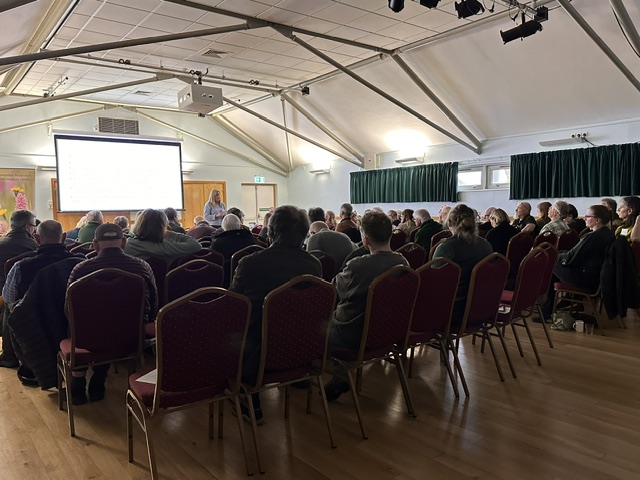
I attended the Hampshire Biodiversity Information Centre (HBIC) Annual Recorders Forum, an event bringing together biological recorders, ecologists, conservation organisations and local wildlife groups to explore how species records contribute to biodiversity monitoring and nature recovery.
The theme for 2026 was Evidence-Based Nature Recovery in Action, with presentations covering volunteer recording initiatives, greater horseshoe bat research, local nature recovery planning, species translocations, habitat restoration and biological data management.
The forum demonstrated how individual wildlife observations, when collected systematically and verified appropriately, can contribute to a much larger body of ecological evidence.
As someone developing my practical ecological survey skills, I found it particularly valuable to understand what happens to biological records after they have been collected and how this information supports conservation planning, species protection and habitat management.
The Role of Biological Records in Conservation
Biological recording involves documenting observations of species at particular locations and times. These records can contribute to our understanding of species distributions, population trends, habitat associations and ecological change.
An effective biological record generally includes four essential elements:
- What: The species observed, identified to an appropriate taxonomic level.
- Where: The location of the observation, ideally accompanied by a grid reference or coordinates.
- When: The date of the observation.
- Who: The identity of the recorder.
Additional information, such as abundance, survey methodology, habitat characteristics and supporting photographs, can increase the value of a record.
Records submitted to local environmental records centres can support ecological assessments, planning decisions, conservation priorities and long-term monitoring.
However, the usefulness of biological data depends on its accuracy, completeness and appropriate interpretation.
This relationship between individual observations and landscape-scale conservation was a recurring theme throughout the forum.
Volunteer Biological Recording – Blacknest Fields
Presentation: Alison Melvin, Friends of Blacknest Fields
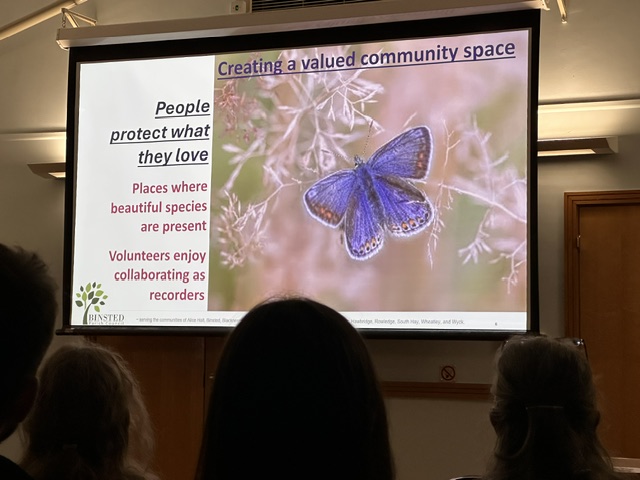
The first project presentation focused on the Blacknest Fields Volunteer Recording Group.
This was particularly relevant to my own volunteering activities, where regular wildlife observations and species surveys are helping me develop my identification and recording skills.
Volunteer recording groups can contribute valuable information about local biodiversity, particularly where repeated observations help establish a clearer understanding of the species using a site.
Systematic recording can also provide a baseline against which future ecological changes may be assessed.
This raised an interesting question:
How can volunteer recording programmes balance accessibility for new recorders with the need for reliable, scientifically useful data?
Training, consistent survey methods, expert verification and supporting evidence can all help improve the quality of records collected by volunteers.
Greater Horseshoe Bat Radio Tracking in West Hampshire
Presentation: Colleen Hope, Hampshire Bat Group and Ecological Consultancy Services Ltd.
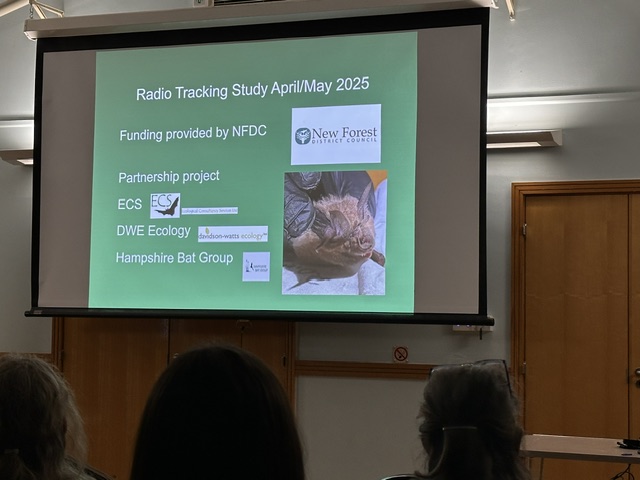
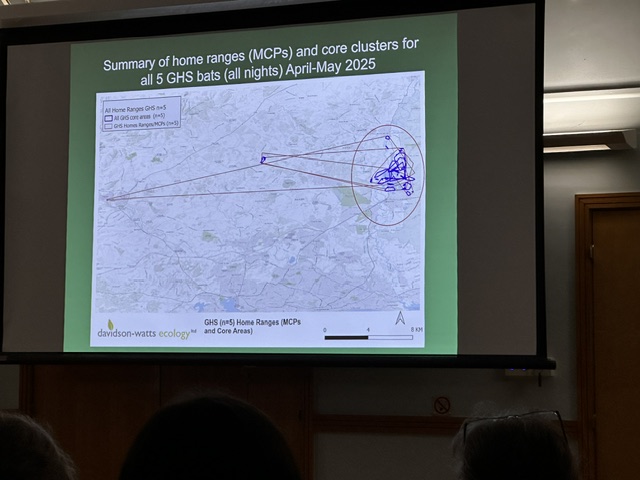
The programme included a presentation on greater horseshoe bat (Rhinolophus ferrumequinum) radio tracking in West Hampshire.
Radio telemetry is an important ecological research technique that can help investigate the movements and habitat use of individual animals.
When used in bat research, appropriately fitted transmitters allow researchers to track individuals and investigate features such as:
- Foraging habitat preferences.
- Flight routes and landscape connectivity.
- Roost locations and roost-switching behaviour.
- Movement distances between roosting and feeding areas.
- The importance of hedgerows, woodland edges and other landscape features.
Greater horseshoe bats are particularly interesting because they depend on suitable roosting sites and productive foraging habitats, often using linear vegetation features as part of their commuting routes.
Understanding these connections can help inform habitat management and development-related mitigation.
I found the topic relevant to my growing interest in bat ecology and the practical methods used to investigate protected species.
It also raised an important ecological question:
How can tracking individual bats improve conservation decisions at a landscape scale?
Although radio tracking can provide detailed information about individual movement patterns, findings need to be interpreted alongside sample size, seasonal variation and wider habitat data.
Local Nature Recovery Strategy – From Records to Action
Presentation: Nicky Court, HBIC
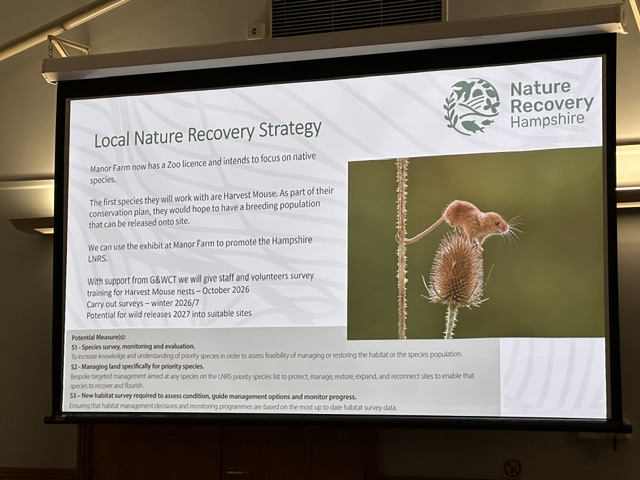
The Local Nature Recovery Strategy (LNRS) update was particularly relevant to understanding how biological records contribute to strategic conservation planning.
Local Nature Recovery Strategies are spatial planning frameworks established under the Environment Act 2021 to identify priorities and opportunities for nature recovery across England.
They are intended to support the development of more coherent ecological networks by identifying areas where habitat protection, restoration or creation could deliver environmental benefits.
Biological records can contribute by helping to identify:
- Existing populations of conservation-priority species.
- Habitats of ecological importance.
- Areas of species richness or ecological sensitivity.
- Potential opportunities to improve habitat connectivity.
- Locations where restoration may support nature recovery objectives.
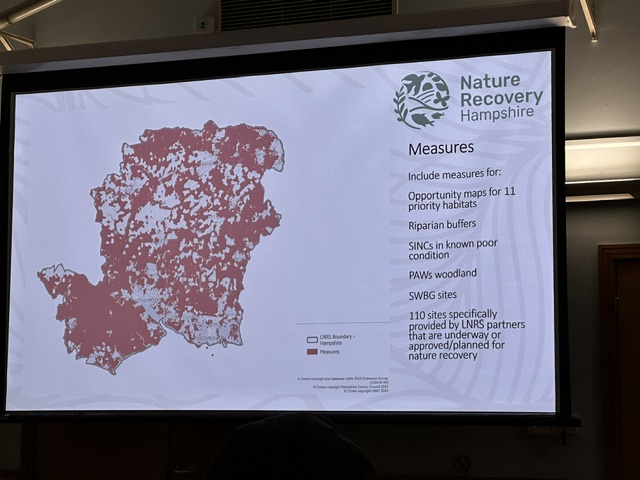
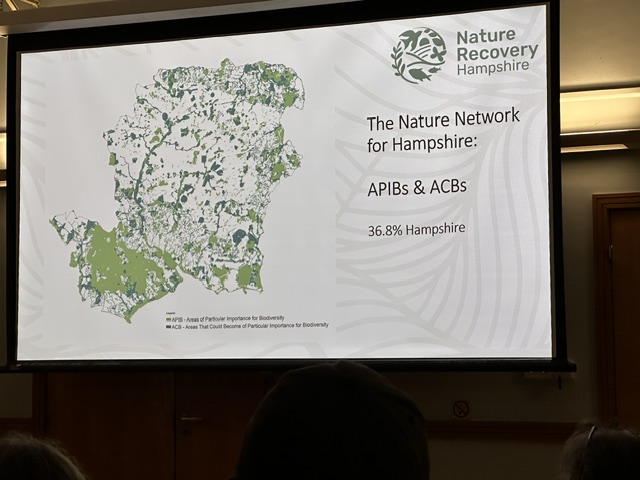
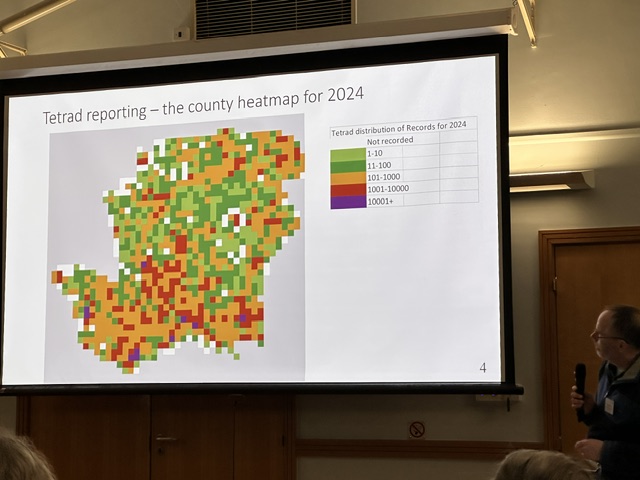
One of the most interesting aspects of this topic was the connection between local observations and regional conservation decisions.
A species record collected by a volunteer may appear relatively insignificant in isolation, yet when combined with thousands of other records, it can contribute to identifying ecological patterns and informing habitat priorities.
The presentation topic highlighted the importance of maintaining accessible, accurate and appropriately verified biodiversity datasets.
Conservation Translocations and the Natterjack Toad
Presentation: Jack Harper, Amphibian and Reptile Conservation
Another presentation explored the history of conservation translocations involving the natterjack toad (Epidalea calamita), including a recent Hampshire case study.
Natterjack toads are one of Britain’s rarest amphibians and are associated with open habitats supporting shallow breeding pools and relatively sparse vegetation.
Their ecological requirements make them particularly sensitive to habitat loss, vegetation succession and changes in hydrology.
Conservation translocation involves intentionally moving organisms to support conservation objectives, such as restoring populations or establishing populations within suitable parts of a species’ range.
Unlike development-related rescue translocations, conservation translocations may be undertaken to support wider species recovery.
Successful projects require careful consideration of:
- Habitat suitability and long-term habitat management.
- Availability of appropriate breeding conditions.
- Genetic diversity and population viability.
- Disease risk and biosecurity.
- Legal permissions and animal welfare.
- Long-term population monitoring.
The subject was particularly relevant to my interest in reptile and amphibian conservation, as it demonstrated how ecological research and practical habitat management can contribute to species recovery.
It also prompted an important question:
How should conservation success be measured following the translocation of a threatened species?
The release of animals is only one stage of the process. Establishing whether populations survive, reproduce and persist over time is essential for evaluating long-term conservation outcomes.
Short Project Updates – Hampshire Conservation Initiatives
The forum included a series of five-minute project updates, illustrating the range of conservation and recording activities taking place across Hampshire.
Biodiversity Audit Event at Enham Alamein
Presenter: Lizzy Staincliffe, on behalf of Enham Trust
The biodiversity audit topic highlighted the role of site-based biological recording in understanding local biodiversity.
Biodiversity audits can help establish baseline information, identify species and habitats of interest and inform future management priorities.
The Status of ‘Vulnerable’
Presenter: Joel Miller, HBIC
This presentation title raised the broader issue of how conservation status is interpreted and communicated.
The term Vulnerable is used within formal conservation assessment frameworks, although its precise meaning depends on the classification system being applied.
Understanding conservation status is important when interpreting ecological records and prioritising species for further research or management.
Hampshire’s Magnificent Meadows Project
Presenter: Rachel Remnant, Land Lore Consulting
The Magnificent Meadows project was particularly relevant to habitat restoration and biodiversity enhancement.
Species-rich grasslands are important habitats for flowering plants, pollinating insects and other invertebrates, while also supporting wider ecological networks.
Their management requires consideration of factors such as soil fertility, vegetation composition, cutting or grazing regimes and habitat connectivity.
This topic complemented my practical conservation volunteering, particularly the relationship between vegetation management and biodiversity outcomes.
Hampshire County Council and LNRS Priority Species
Presenter: Andy Davidson, Hampshire County Council
This update focused on priority species in relation to Hampshire’s Local Nature Recovery Strategy.
Identifying priority species is an important component of targeting conservation effort, particularly where species have restricted distributions, declining populations or specific habitat requirements.
The subject reinforced the importance of ensuring conservation decisions are supported by reliable species data.
The Natural Sciences Collection at Chilcomb House
Presenter: Richard Dickson
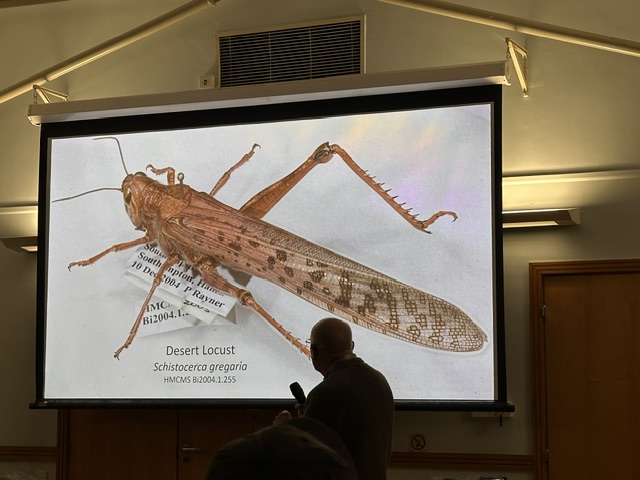
The final short update introduced the natural sciences collection at Chilcomb House.
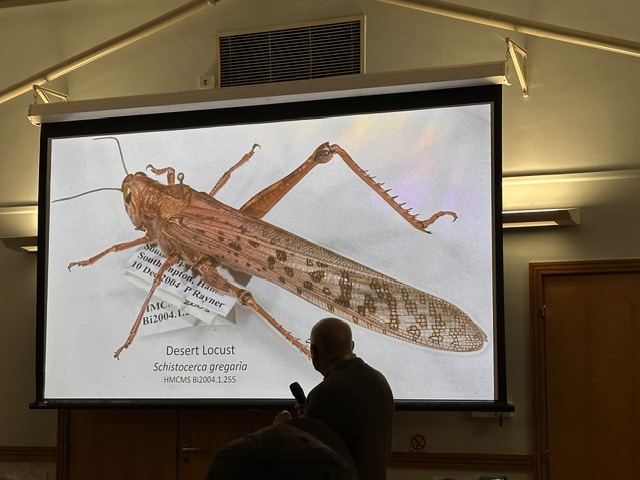
Natural history collections provide an important historical record of biodiversity and can support research into species identification, distribution and environmental change.
Museum specimens may provide evidence of the historical occurrence of species, helping researchers compare past and present distributions.
This demonstrates that biological recording extends beyond contemporary field observations and includes historical scientific collections.
Biological Data Management – Verification and Recording Bias
Presentations and discussion:
- Journey of a Record – Lizzy Peat, HBIC.
- Data Bias and Visualisation – Chris Dennis, Hampshire Ornithological Society Data Manager.
The afternoon session focused on biological data management, verification and the challenges associated with interpreting ecological records.
I found these topics particularly important because they demonstrated that collecting a species record is only the beginning of the scientific process.
The Journey of a Biological Record
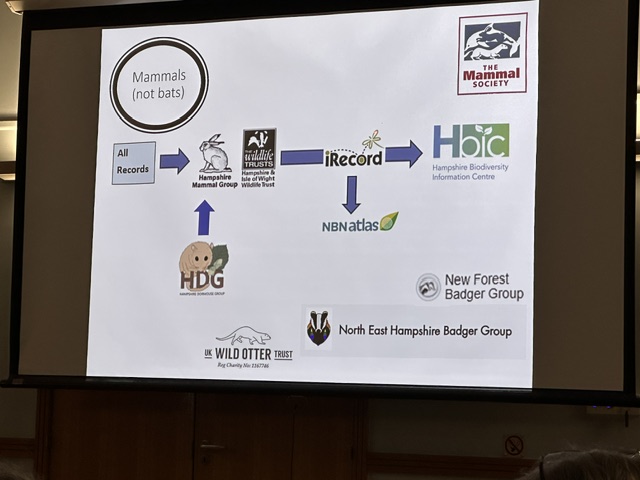
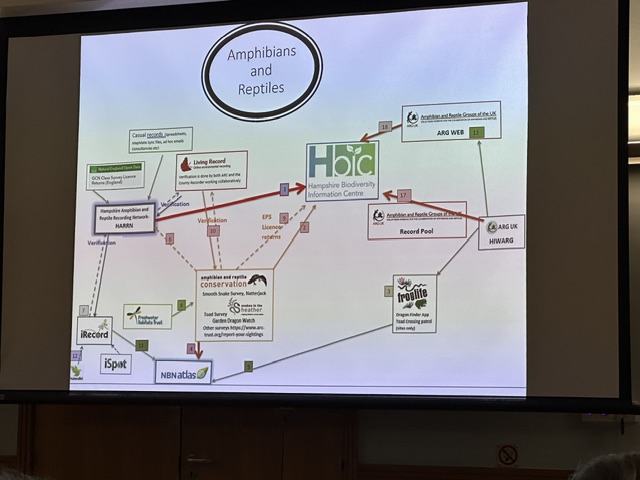
Once a species observation has been submitted, it may undergo several stages before being incorporated into a biodiversity dataset.
These can include:
- Submission: A recorder provides information about the species, location, date and supporting evidence.
- Validation: The record is checked for completeness, appropriate formatting and geographical plausibility.
- Verification: The identification is assessed, potentially by a taxonomic specialist.
- Database management: The record is stored and integrated into a wider biological recording system.
- Data use: Verified records can inform ecological research, planning decisions, conservation management and biodiversity reporting.
An important distinction is that validation and verification are not identical.
Validation concerns whether the information is internally consistent and appropriately recorded, whereas verification considers whether the species identification is credible.
This is particularly relevant when recording difficult taxonomic groups or species occurring outside their expected distribution.
Data Bias and Visualisation
The topic of recording bias was especially thought-provoking.
Species records do not necessarily represent an evenly distributed sample of biodiversity.
For example, recording effort may be greater:
- At accessible nature reserves and popular walking routes.
- In locations with active volunteer recording groups.
- For conspicuous or easily identified species.
- During favourable weather conditions.
- At particular times of year.
- In areas where ecological surveys are commissioned.
Consequently, a map showing a high concentration of species records may reflect greater survey effort rather than genuinely higher species abundance or diversity.
Similarly, an area with few records may be under-recorded rather than ecologically unimportant.
This raised an important question:
How can ecologists distinguish between genuine ecological patterns and patterns created by uneven recording effort?
Potential approaches include standardised survey methods, effort-based analysis, targeted surveys of under-recorded areas and careful interpretation of species distribution maps.
The session reinforced the importance of critically evaluating data rather than assuming that all records provide an equally representative picture of biodiversity.
Reflections and Learning
The HBIC Annual Recorders Forum provided an excellent opportunity to understand the wider significance of biological recording.
Much of my practical volunteering involves observing, identifying and recording wildlife, whether through butterfly transects, reptile surveys or other ecological monitoring activities.
The forum helped me recognise how these individual observations can contribute to larger datasets used to monitor biodiversity and guide conservation decisions.
I was particularly interested in the connections between ecological records, local nature recovery planning and the identification of priority species.
The greater horseshoe bat radio-tracking and natterjack toad translocation topics also demonstrated how specialist ecological research can contribute directly to species conservation.
However, one of the most important learning points was the issue of data quality and recording bias.
It is easy to assume that a distribution map accurately represents where a species occurs. In reality, recording effort, accessibility, species detectability and verification can all influence the information presented.
This has important implications for ecological consultancy, where decisions about development impacts and conservation priorities may rely on existing biological records.
The event raised several questions that I would like to explore further:
How reliable are biological records when survey effort varies substantially between locations?
How can citizen science projects improve biodiversity datasets while maintaining appropriate verification standards?
How can historical records and contemporary field surveys be combined to identify genuine long-term ecological change?
These questions reinforced the importance of taking a critical, evidence-based approach to ecological data.
Key Learning Outcomes
- Developed a greater understanding of the role of local environmental records centres in biodiversity conservation.
- Explored how biological records support Local Nature Recovery Strategies and conservation priorities.
- Gained insight into specialist research methods, including bat radio telemetry.
- Improved my understanding of conservation translocations and the importance of long-term monitoring.
- Recognised the value of local volunteer recording initiatives and habitat restoration projects.
- Learnt about biological record validation, verification and data management.
- Developed an appreciation of how uneven survey effort can introduce bias into species distribution datasets.
- Strengthened my understanding of how biological recording supports evidence-based ecological decision-making.
Final Thoughts
Attending the HBIC Annual Recorders Forum was a valuable opportunity to see how individual wildlife observations contribute to conservation at a much broader scale.
The range of presentations demonstrated that biological recording is fundamental to understanding species distributions, identifying conservation priorities and monitoring ecological change.
What I found particularly interesting was the relationship between fieldwork and data interpretation. Collecting records is essential, but their conservation value also depends on accurate identification, appropriate verification and an understanding of the limitations of the dataset.
The event reinforced my interest in developing strong field identification and recording skills while continuing to improve my understanding of ecological data analysis.
It also highlighted an important principle: effective nature recovery depends not only on collecting more biological records, but on ensuring that the information is reliable, representative and used appropriately.
As I continue developing my ecological knowledge and practical survey experience, I hope to contribute meaningful biological records that support local conservation initiatives and the wider evidence base for nature recovery.
References and Further Reading
- Hampshire Biodiversity Information Centre (2026). Annual Recorders Forum: Evidence-Based Nature Recovery in Action. Event programme, 7 March 2026.
- Environment Act 2021. Legislation establishing the framework for Local Nature Recovery Strategies in England.
- Joint Nature Conservation Committee (JNCC). Resources on UK biodiversity monitoring, species conservation and biodiversity indicators.
- National Biodiversity Network (NBN). Resources on biological recording, data sharing and the NBN Atlas.
- Amphibian and Reptile Conservation. Resources on natterjack toad conservation and species recovery.
- Bat Conservation Trust. Resources on greater horseshoe bat ecology, survey methods and conservation.
These field notes combine my experience of attending the forum with the subjects listed in the event programme and additional ecological background. The programme identifies presentation topics and speakers, but does not contain the full presentation content; explanatory sections should therefore not be interpreted as verbatim accounts of what individual speakers said.
Photographs